Leadership for Public Trust
Where leadership, communication, and civic trust meet.

Today's education leaders face elevated scrutiny, political tension, and misinformation that moves faster than facts – how you lead through it is now core to the job and shapes the trust your community places in you and your district.
Overview
Leadership for Public Trust is a joint AASA and NSPRA professional learning experience, grounded in three integrated tracks: Civic Leadership, Narrative Leadership, and Crisis Leadership, that prepares you and your team to lead together with clarity, credibility, and care through the moments when decisions move fast, narratives form quickly, and trust is constantly tested.
Here's what this experience makes possible:
A clearer leadership lens
A practical understanding of public trust as a condition leaders deliberately create through decisions, relationships, communication, and action.
Shared team language
Common concepts for discussing community context, narrative, alignment, credibility, uncertainty, and recovery.
Stronger anticipatory capacity
A better ability to identify stakeholder perspectives, pressure points, interpretation risks, and unintended consequences before a decision becomes public.
Practical approaches
Tools, questions, examples, and routines that can be adapted immediately to district leadership work.
Greater narrative readiness
The ability to connect priorities, decisions, evidence, and stories into a coherent explanation people can understand and act on.
Crisis readiness and recovery discipline
Greater clarity about roles, decision practices, tone, consistency, misinformation, and follow-through under pressure.
The Leadership for Public Trust virtual series is designed to help district leadership teams strengthen their ability to lead through complexity, build and sustain public trust, and align communication with decision-making at the highest levels.
Each track includes three 90-minute virtual sessions. Each track stands on its own while also supporting a broader leadership model that enables districts of all sizes to navigate competing expectations, shape public understanding and lead with clarity when it matters most.
Choose one session, one leadership track, or experience all nine sessions across Civic, Narrative and Crisis Leadership.
Three Registration Options:
- An individual session: $299
- One full track of three sessions: $750
- The complete virtual experience of all nine sessions (Recommended): $1,750
Visit the tracks below to register for a single session or one track. Register here for the complete experience, totaling 9 sessions.
3 Tracks, 1 Goal: Public Trust
These integrated tracks are designed to support district leaders when public expectations, district decisions, and community trust collide.
Civic Leadership helps district leaders understand and navigate the public, political, and community contexts where education decisions are made. You'll learn to anticipate stakeholder responses, identify pressure points, align internally, and make decisions grounded in student needs, community context, and long-term public trust.
Register for Civic Leadership Track
March 4, 2027 at 12:00 p.m. - 1:30 p.m. ET
Superintendents are expected to lead in environments defined by competing values, public pressure, and rapidly shifting expectations. Strong leadership requires not only sound decisions, but an awareness of how those decisions will be experienced across the community.
This session focuses on how leadership teams can make stronger, more informed decisions by incorporating communication awareness early, considering how issues may be interpreted, where tensions may emerge, and how to align internally before decisions become public. The goal is not simply to manage reaction, but to lead in ways that build clarity, credibility, and public trust from the outset. This session moves beyond engagement and transparency as standalone practices and focuses on how leadership teams use community awareness to make more effective decisions in real time.
Speakers:
Jennifer Perry Cheatham, Ed.D., Senior Lecturer on Education and Co-Chair of the Public Education Leadership Project (PELP), Harvard Graduate School of Education (Mass.)
April 1, 2027 12:00 p.m. - 1:30 p.m. ET
Trust is not built in moments of crisis, it is built through consistent leadership over time. High-functioning districts treat trust not as an outcome, but as a deliberate approach embedded in how decisions are made, communicated, and followed through. Rather than focusing on how trust is built, this session examines how established trust allows leaders to move forward with clarity, even when decisions are difficult or unpopular. Participants will examine how leadership behavior and communication – formal and informal – either reinforce or erode trust when decisions are tested in real time.
Speakers:
Erin Rathke, Ed.D., Superintendent and Celi Haga, APR, Chief of Staff and Executive Director of Strategic Communications, Eastern Carver County Schools (Minn.)
May 6, 2027 12:00 p.m. - 1:30 p.m. ET
Engagement is often treated as a communications task rather than a leadership responsibility. In practice, meaningful engagement strengthens decision-making, builds shared ownership, and reinforces public trust. This session reframes engagement as part of how districts operate, ensuring that leadership decisions are informed by community perspective while maintaining clarity and momentum. Participants will explore how to design engagement approaches that move beyond one-way communication and support understanding and action. This session also focuses on how districts move from gathering input to using that input to shape direction, ensuring engagement informs decisions rather than existing alongside them.
Speakers:
Verletta White, Ed.D., Superintendent, and Claire Mitzel, Director of Communications & Public Relations, Roanoke City Public Schools (Va.)
Narrative Leadership focuses on how districts create a shared understanding of their identity, goals, purpose, and the possibilities that success brings. You'll learn to identify dominant narratives, close gaps between intention and perception, align leadership language, and use storytelling strategically to build trust and sustain momentum.
Register for Narrative Leadership Track
March 9, 2027 12:00 p.m. - 1:30 p.m. ET
Every district operates within a narrative, whether intentionally shaped or not. These narratives influence how leadership decisions are received and whether stakeholders interpret actions with trust or skepticism. This session moves beyond responding to misinformation and instead focuses on how leadership teams create the conditions where clear, consistent understanding reduces the need for correction. This session also focuses on helping leadership teams understand how their district is currently perceived and where gaps may exist between intention and community understanding.
Speakers:
Moira O'Neil, Senior Vice President of Programs, FrameWorks Institute (Washington, D.C.)
April 19, 2027 12:00 p.m. - 1:30 p.m. ET
Narrative breaks down when leadership actions, internal messaging, and public communication are not aligned. Inconsistent signals create confusion and weaken trust. This session explores how leadership teams can build internal clarity first – ensuring that direction, language, and expectations are aligned before communicating externally. Rather than focusing on communication routines alone, this session also explores how alignment at the leadership level determines whether strategy is understood and sustained across the system.
Speakers:
Luis Correa, Ed.D., Superintendent, Gurnee School District 56 (Ill.); Toriano “Tori” Holloway, Ph.D., Superintendent, Vicksburg Warren School District (Miss.); Delaina McCormack, APR, Social Media Manager, Fairfax County Public Schools (Va.); Shane Haggerty, Senior Director of Brand and Client Strategy, AASA, The School Superintendents Association
May 17, 2027 12:00 p.m. - 1:30 p.m. ET
Stories help make leadership priorities visible, but only when used intentionally. When aligned to district goals, stories can build understanding, reinforce direction, and sustain momentum over time. This session focuses on how leadership teams can use real examples and experiences to make their work more tangible and meaningful for stakeholders. It positions the story not as a communication output, but as a leadership tool for reinforcing priorities, demonstrating progress, and maintaining alignment over time.
Speakers:
Laurie Dent, Ph.D., superintendent, and Elle Warmuth, APR, director of communications, Sumner-Bonney Lake School District (Wash.)
Crisis Leadership prepares district teams to make decisions and communicate effectively during high-stakes situations. You'll examine how leadership roles, decision-making systems, tone, timing, message discipline, recovery, and follow-through influence whether trust is preserved or eroded during and after a crisis.
Register for Crisis Leadership Track
April 30, 2027 12:00 p.m. - 1:30 p.m. ET
In moments of crisis, leadership teams must make high-stakes decisions quickly, often with incomplete information and intense scrutiny. This session focuses on how leaders approach decision-making under pressure, balancing urgency, accuracy, and long-term impact while maintaining alignment across the organization. This session also emphasizes how leadership decisions – not just communication – shape outcomes during high-pressure situations.
Speakers:
Rubén Aurelio, Superintendent, and Celina Baguiao, Director of Dommunications, Vallejo City Unified School District (Calif.)
May 28, 2027 12:00 p.m. - 1:30 p.m. ET
In a crisis, stakeholders are not only listening to what is said, they are evaluating how leadership shows up. This session focuses on how leaders communicate when information is incomplete and where credibility is shaped more by presence and consistency than by certainty. This session also explores how leaders communicate with clarity, transparency, and consistency even when all answers are not yet known.
Speakers:
Josh Swanson, Ed.D., Superintendent, Grace Becker, APR, Director of Marketing and Customer Experience, and Dirk Tedmon, APR, Executive Director of Marketing & Communications, Eden Prairie Schools (Minn.)
June 25, 2027 12:00 p.m. - 1:30 p.m. ET
What happens after a crisis often determines whether trust is strengthened or eroded. Recovery requires continued clarity, consistency, and follow-through. This session focuses on how leadership teams move forward by supporting their communities, reflecting on their approach, and strengthening systems for the future. This session also examines how districts use post-crisis moments to strengthen leadership systems, not just recover from the event itself.
Speakers:
Ivan Duran, Ed.D., Superintendent and Tove Tupper, APR, Chief Communications Officer, Highline Public Schools (Wash.)
- Superintendents
- Cabinet members
- School communication professionals
- Public relations and community engagement leaders
- Assistant superintendents
- Principals and district leaders involved in public-facing leadership
- Board-superintendent leadership teams, where appropriate
- Districts without a dedicated communication staff that need practical leadership communication capacity
The experience is most impactful when teams participate together (just one registration required).
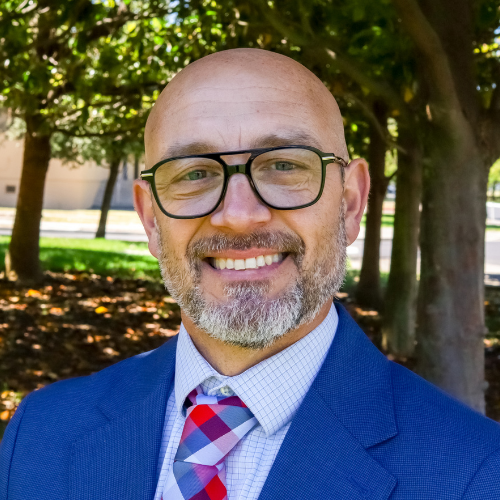




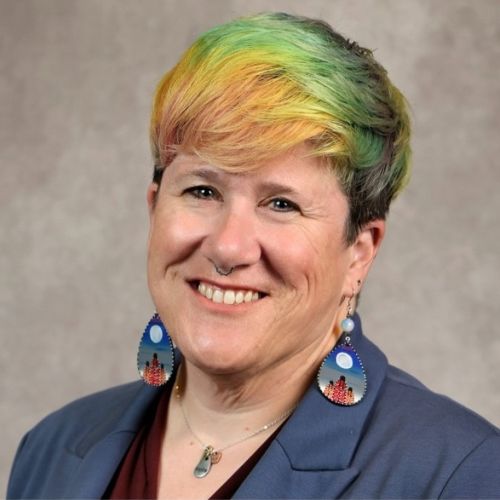







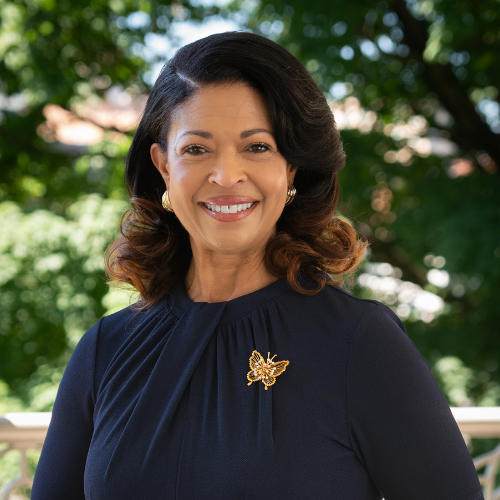
What matters is bringing people together to listen, learn and build understanding around a common goal for students. Civic leadership helps communities move beyond reacting to change and toward shaping what comes next.
David R. Schuler
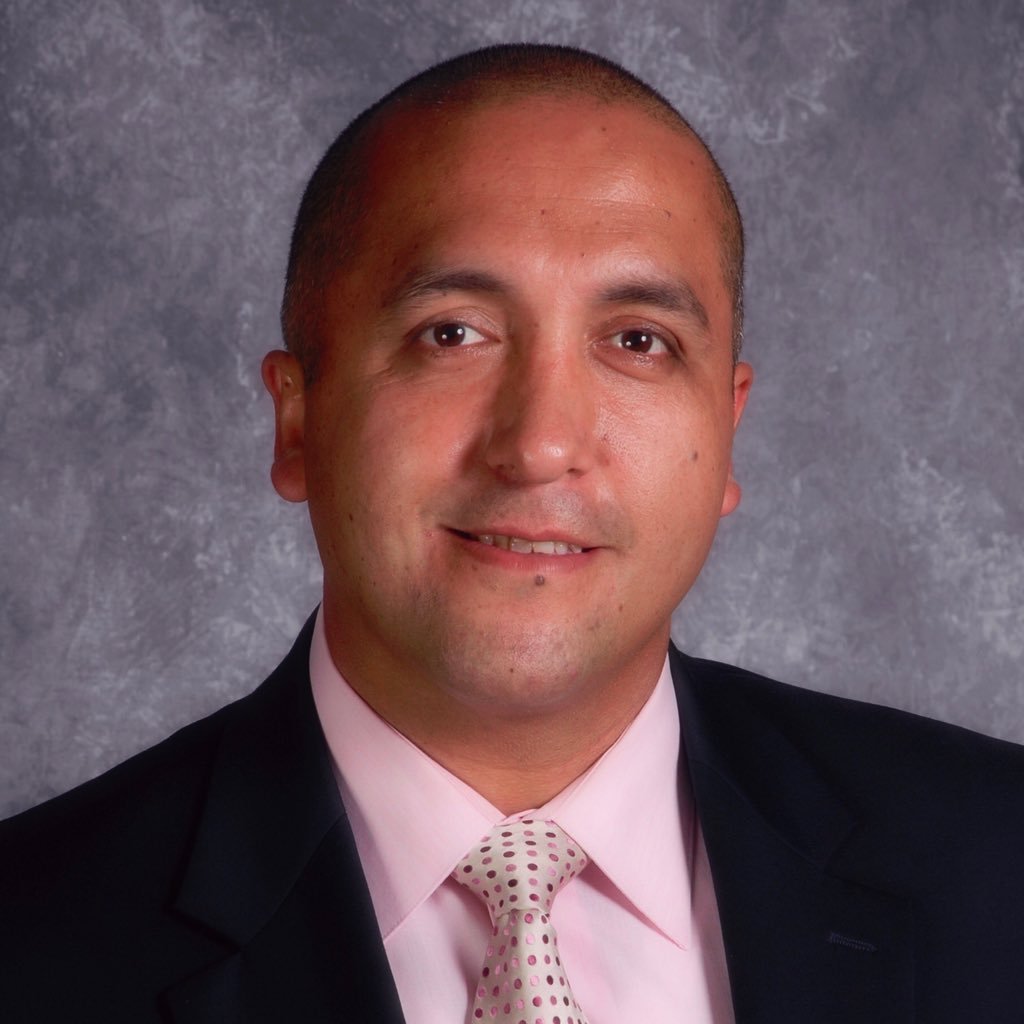
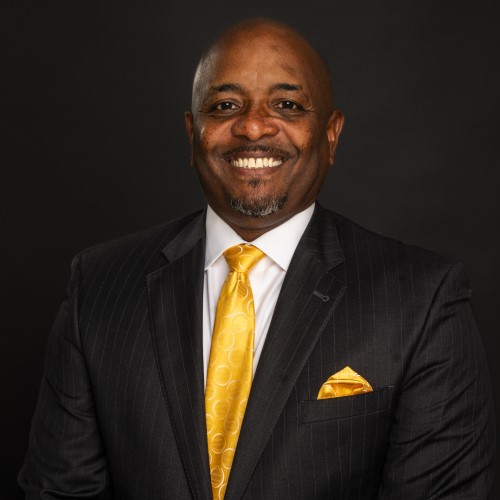
It may feel safer to stay quiet, communicate only when necessary and avoid the messiness of public partnership. But silence rarely builds trust. Distance rarely creates confidence. When superintendents do not step into civic relationships, districts can become isolated from the very communities they are meant to serve.Al Lewis.png?sfvrsn=50d049ba_2)
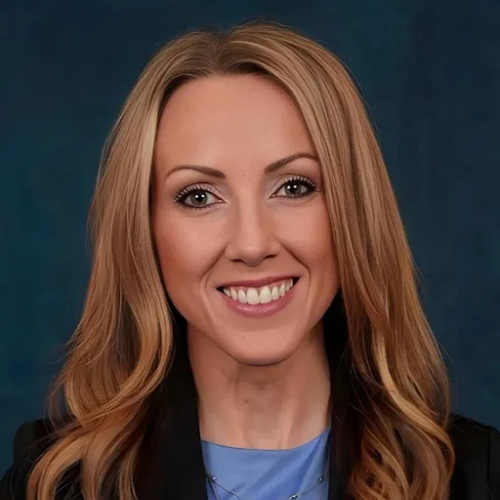
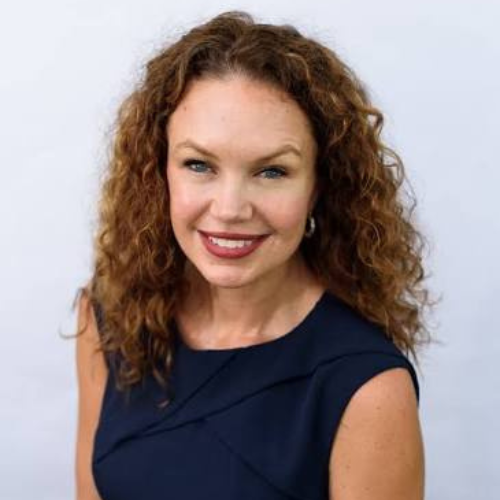
Communication is not something that happens after a leadership decision is made. It is part of how strong leaders listen and lead their communities. Leadership for Public Trust brings superintendents and communication professionals to the table together, giving district teams practical strategies to anticipate the complexity of decisions, strengthen alignment across their systems and communicate with clarity when the stakes are high.Barbara Hunter
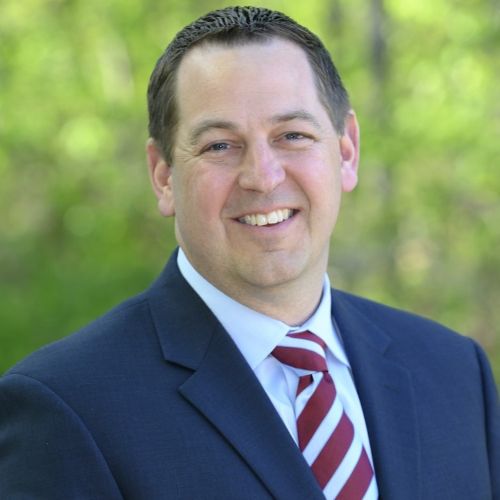
...superintendents are uniquely positioned to restore public trust and help communities imagine and build the next era of public education. Superintendents must perform all of their functions — instructional leader, manager, communicator and statesman — as civic leaders who are responsible for building a powerful coalition in support of a community’s children.Jennifer Perry Cheatham
Details
March 4 to June 25, 2027
Contacts
-
Shane Haggerty
Senior Director, Brand & Client Strategy
AASA, The School Superintendents Association
-
Melissa McConnell
Manager of Professional Development and Member Services
National School Public Relations Association
Civic Leadership Spotlight
The September issue of School Administrator turns its attention to a shift already underway: the superintendency's growing role as civic leadership.
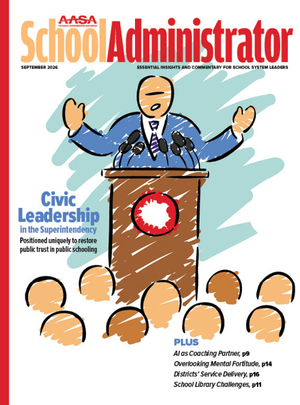
A New Leadership Paradigm: Superintendent as Civic Leader
By Jennifer Perry Cheatham
"In a politically volatile environment, no superintendent can single-handedly carry the weight of civic leadership. They need a strong, diverse leadership team — and distributed leadership throughout the district — capable of engaging with conflict, advancing equity, sustaining trust with families and staff and nurturing a leadership culture."
Continue the Learning: Leadership for Public Trust Summit - October 2027
The virtual series is just the beginning. In October 2027, the Leadership for Public Trust Summit will bring superintendents, communication leaders and district teams together for an in-person experience focused on putting the Civic, Narrative and Crisis Leadership domains into practice.
More information about the Leadership for Public Trust Summit coming soon!