
From Industry to the Classroom
January 01, 2026
A Massachusetts district delivers relevant, updated skills through its career and technical pathways for students
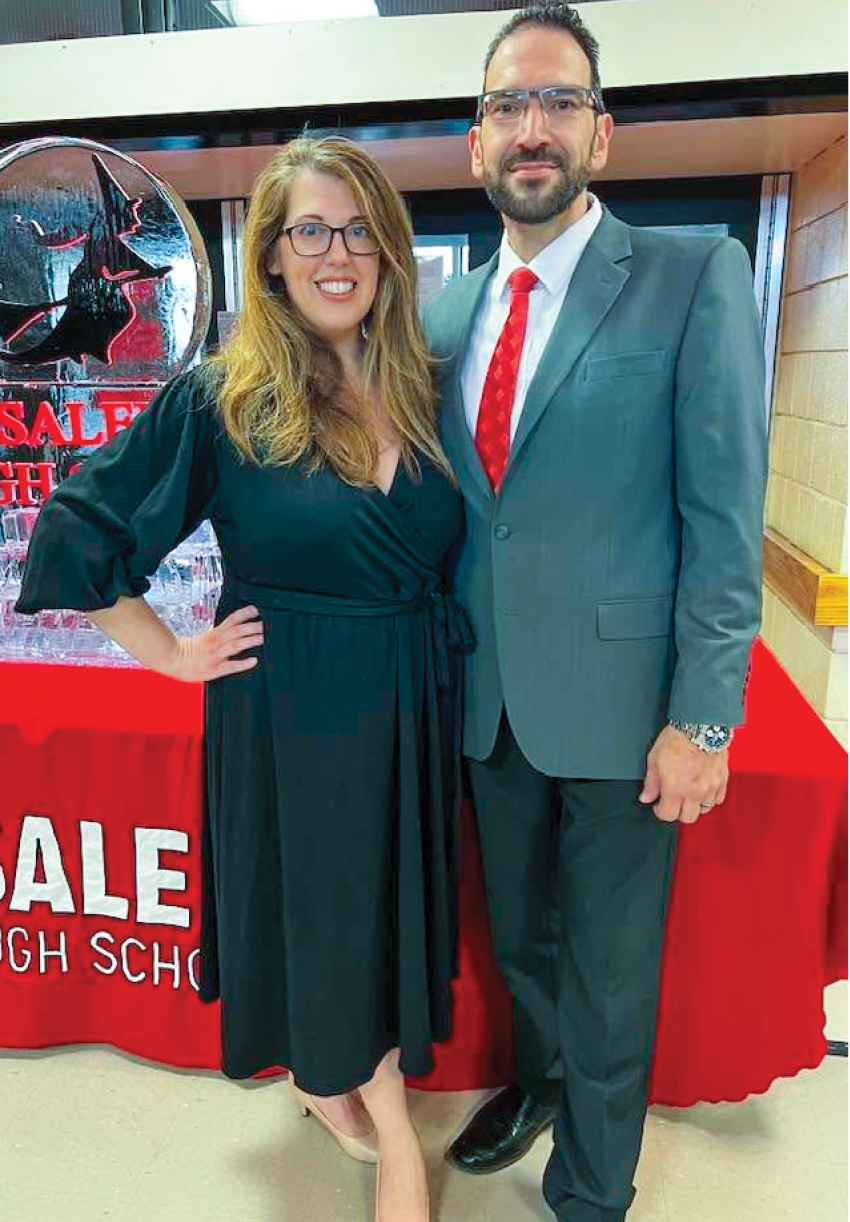
When I first stepped into a classroom after a dozen years in the construction industry, I quickly realized that teaching wasn’t just about what you know. It was about translating that knowledge into skills students could carry into the workforce.
On my first day in the classroom, I remember vividly standing in front of a group of high school students, their eyes fixed on me, waiting for guidance, while I stumbled through lesson plans I had never previously prepared. It was intimidating but exhilarating. That moment shaped my philosophy as a school district director of career and technical education. Today’s CTE programs must go beyond teaching technical skills.
In a competitive workforce, industry knowledge alone isn’t enough. Our students need professional skills: communication, collaboration, problem-solving and adaptability to stand out when competing for spots in trade unions, technical schools, apprenticeships or the workplace. It’s not just about learning a trade. It’s about preparing students to thrive, lead and build lasting careers.
Employers consistently tell us that technical expertise gets students in the door. Still, it’s their ability to work on diverse teams, think critically and adapt to changing demands that determines long-term success. Whether students plan to pursue engineering, culinary arts, health sciences or construction, industries increasingly expect graduates to arrive with a strong foundation of soft skills alongside their technical knowledge.
Early Exposure
In Salem, Mass., CTE is a cornerstone of student success. Our programs reach nearly every student, blending academic rigor with hands-on, project-based experiences to support both personal and professional growth. From medical assisting and computer science to culinary arts and the construction trades, our goal is to provide a structured, inclusive environment where students can explore, develop and excel in their chosen field.
Our approach begins in 9th grade, exposing students to career paths they may not have considered. Through our exploratory program, students rotate through 10 different CTE pathways, gaining a better understanding of their strengths, interests and career possibilities before committing to a three-year program.
Consider Jasmine. She started 9th grade torn between culinary arts and web design, two areas that she thought she knew well. But during her exploratory rotations, she discovered a passion for coding. Today, she’s designing apps in our programming and web development pathway and preparing for internships and college-level courses. Stories like hers demonstrate the value of giving students time and space to explore before making decisions that shape their futures.
We’ve seen similar outcomes across multiple pathways. Students who begin unsure of their direction leave high school with industry certifications, career-ready portfolios and confidence in their abilities. Early exploration sets the foundation for long-term success.
Integrating Academics
Salem’s commitment to comprehensive CTE is reflected in our programming and our results. Nearly 70 percent of our 950 high school students participate in a CTE pathway, with a significant number coming from economically disadvantaged backgrounds. More than 60 percent qualify for free or reduced-price lunch, and 20 percent are multilingual learners.
Our 9th-grade exploratory program engages more than 90 percent of freshmen, providing students with early exposure to a wide range of career options. More than 70 percent choose to continue into a full-time CTE pathway.
These numbers aren’t just statistics. They represent access and opportunity. For many of our students, CTE offers a clear pathway to economic stability and secure careers.
Integration of academics with technical skills is central to our model. A construction student might study math concepts such as fractions, ratios, percentages and basic geometry in their morning math class and then apply those same concepts in the afternoon while working on carpentry, roofing or other hands-on projects.
Similarly, culinary arts students learn food science, measurement and nutrition principles in class and immediately apply that knowledge through meal preparation, catering and managing a student-run café, reinforcing both academic understanding and real-world skills.
This blended approach also ensures that students graduate with the ability to transfer knowledge across fields, a skill that’s becoming increasingly valuable as industries evolve. When students understand how academic concepts connect to technology, design and problem solving, they are better prepared to adapt to new systems, tools and career demands.
Authentic Applications
At the heart of Salem’s CTE programs is authentic workplace learning. Students gain real-world experience through internships, cooperative education placements and partnerships with local businesses, enabling them to apply their classroom knowledge directly in professional settings and develop essential workplace skills.
For instance, students in programming and web development design websites and applications for nonprofit organizations, creating professional portfolios that demonstrate their abilities to future employers and college programs. In the Culinary Arts program, students operate a student-run café and catering service, managing all aspects of the business, including menu planning, food preparation, customer service and business operations, providing hands-on experience in hospitality management.
By graduation, Salem CTE students complete more than 900 hours of hands-on training, earn industry-recognized credentials, such as OSHA, CPR/AED and ServSave. They also receive a certificate of attainment that demonstrates mastery of both technical and professional skills. These experiences give students a competitive edge, opening doors to college programs, apprenticeships and high-demand careers while providing a foundation of confidence, adaptability and workplace readiness.
Many of our graduates enter apprenticeships with union trades, attend technical schools or pursue college degrees. In contrast, others step directly into careers in health care, the culinary arts, IT and the automotive industry. Through articulation agreements with local colleges and technical institutions, students can earn college credit for the work and skills they complete in CTE, giving them a head start on postsecondary programs and reducing the time and cost required to earn a degree or certification.
In all cases, the combination of technical training, professional skills and real-world experience ensures Salem students are prepared not only to start a job, but to excel, advance and lead in their chosen fields, equipped with credentials and confidence to succeed in higher education or the workforce.
Facing Challenges
Even with strong programs, we face challenges. Equity is a top priority. Our programs have limited capacity, so we carefully manage enrollment while ensuring no student is excluded based on GPA, attendance, language acquisition or special education status. We must provide scaffolding to help all students succeed.
We also must challenge stereotypes about gender and career choice. Female students in construction and male students in culinary arts or health sciences often face societal expectations that discourage them from pursuing their interests. Through mentoring, advisory boards and highlighting student success stories, we ensure all students see themselves represented and supported.
To deepen this work, we’ve expanded outreach to middle school students and families, ensuring equitable access to CTE opportunities before high school. Early engagement helps students, particularly those from historically underrepresented groups, see CTE pathways as viable and empowering options.
Recruiting and retaining CTE teachers present unique challenges. Many educators come directly from industry, bringing exceptional technical expertise but limited teaching experience. To support them, we pair new teachers with mentor educators, provide targeted professional development and offer collaborative planning time to help them transition successfully into the classroom.
One recent hire, an experienced electrician with decades of field experience, entered teaching with limited classroom experience. By pairing him with a mentor and providing training, we are helping him build the confidence and tools to work effectively with students.
Advisory boards and partnerships with trade unions play a vital role in teacher recruitment, creating pipelines of skilled professionals ready to transition into education while keeping our programs aligned with industry standards and workforce needs.
Refreshed Programs
CTE programs must continually evolve in tandem with the industries they serve. At Salem, we regularly review our programs, update curricula and integrate emerging technologies to ensure students are workforce-ready.
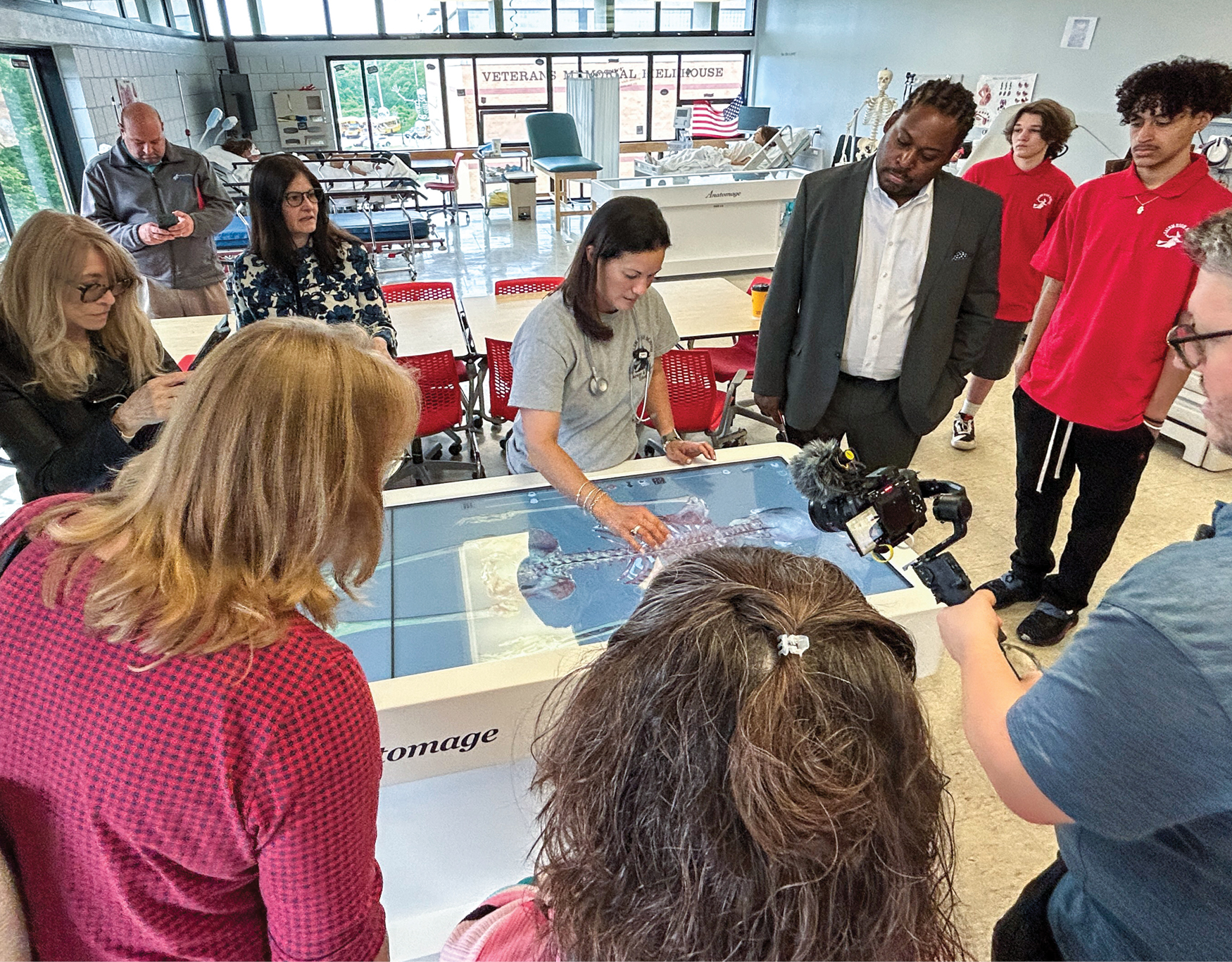
In automotive technology, students train on advanced electric-vehicle simulators, developing skills for a rapidly changing transportation field. In facilities management, students gain experience with building automation systems. In construction technology, geothermal, wind and solar energy systems are incorporated using state-of-the-art simulation equipment.
These updates are guided by advisory boards composed of local employers, community organizations, postsecondary partners and alumni. Continuous feedback ensures our programs remain relevant, innovative and effective.
Looking ahead, we’re expanding partnerships with local tech companies and green-energy startups to integrate artificial intelligence, cybersecurity and renewable energy systems into our programs, preparing students for the jobs of tomorrow, not just today.
Five Strategies
Through my experience leading Salem CTE, I’ve learned that success depends on thoughtful planning, active partnerships and ongoing support. I suggest five actionable strategies.
Engage advisory boards. Partner with industry leaders to guide curriculum, provide mentorship and expand opportunities for students in new and emerging fields.
Audit programs regularly. Keep pathways relevant, rigorous and aligned with workforce demands.
Support teacher transitions. Offer mentorship and professional development for new educators coming from industry.
Promote equity and access. Challenge stereotypes, provide scaffolds and ensure diverse learners are supported.
Leverage grants and partnerships. Use external funding to enhance technology, certifications and work-based learning opportunities.
Salem’s experience demonstrates that a comprehensive, inclusive and forward-thinking CTE program does more than prepare students for careers — it builds confidence, resilience and lifelong skills.
My own journey from construction to the classroom taught me a critical lesson: Preparing students for the workforce requires more than technical training. It takes vision, collaboration and adaptability. At Salem, we’ve built a CTE model that equips students with the skills, confidence and experience they need to succeed, wherever their paths may lead. n
MARIO SOUSA is career technical education director and cooperative education coordinator in the Salem Public Schools in Salem, Mass.
Author
Mario SousaA Student’s Struggling Start Leads to an Elevated Perch
When I first walked into high school as a 9th grader, I wasn’t sure if I would make it. I struggled academically, especially in math and English.
As a student with learning disabilities, I often felt like I was falling behind. Being a multilingual student, while helping to support my mother and sister, made school even harder. I didn’t know which career path was right for me, or if I even had one.
The turning point came with Somerville’s 9th-grade exploratory program. I was given the opportunity to explore various career pathways, from working in a medical field, cooking in the culinary program and building small carpentry projects. At first, I wasn’t sure where I belonged. But slowly I discovered I loved working with my hands and solving problems on real projects. By the end of the year, I had joined the carpentry program.
Still, I wasn’t sure I would even get accepted into the school’s carpentry program because my attendance and grades weren’t the strongest.
That’s where my teachers made all the difference. Mr. Sousa and Mr. Day, my carpentry instructors, never doubted my abilities. Even when I lacked confidence, they pushed me to see what I was capable of. They showed me how to break down projects step by step, read blueprints and use math in ways that finally made sense. With their guidance, I started to build skills and gain confidence.
Soon, I was completing safety training, earning certifications and working on real construction projects with local business partners. One of my earliest experiences was helping remodel a community center. That project didn’t just teach me carpentry. It taught me teamwork, communication and responsibility, skills just as important as knowing how to use tools.
Pushing Onward
The summer internship program became another turning point. I joined a local roofing company, where I applied what I had learned in class to real job sites. I made mistakes, but each one became a lesson that pushed me forward. Every day, I grew more confident in my abilities. My supervisors noticed my work ethic and willingness to learn, and that recognition motivated me to work even harder.
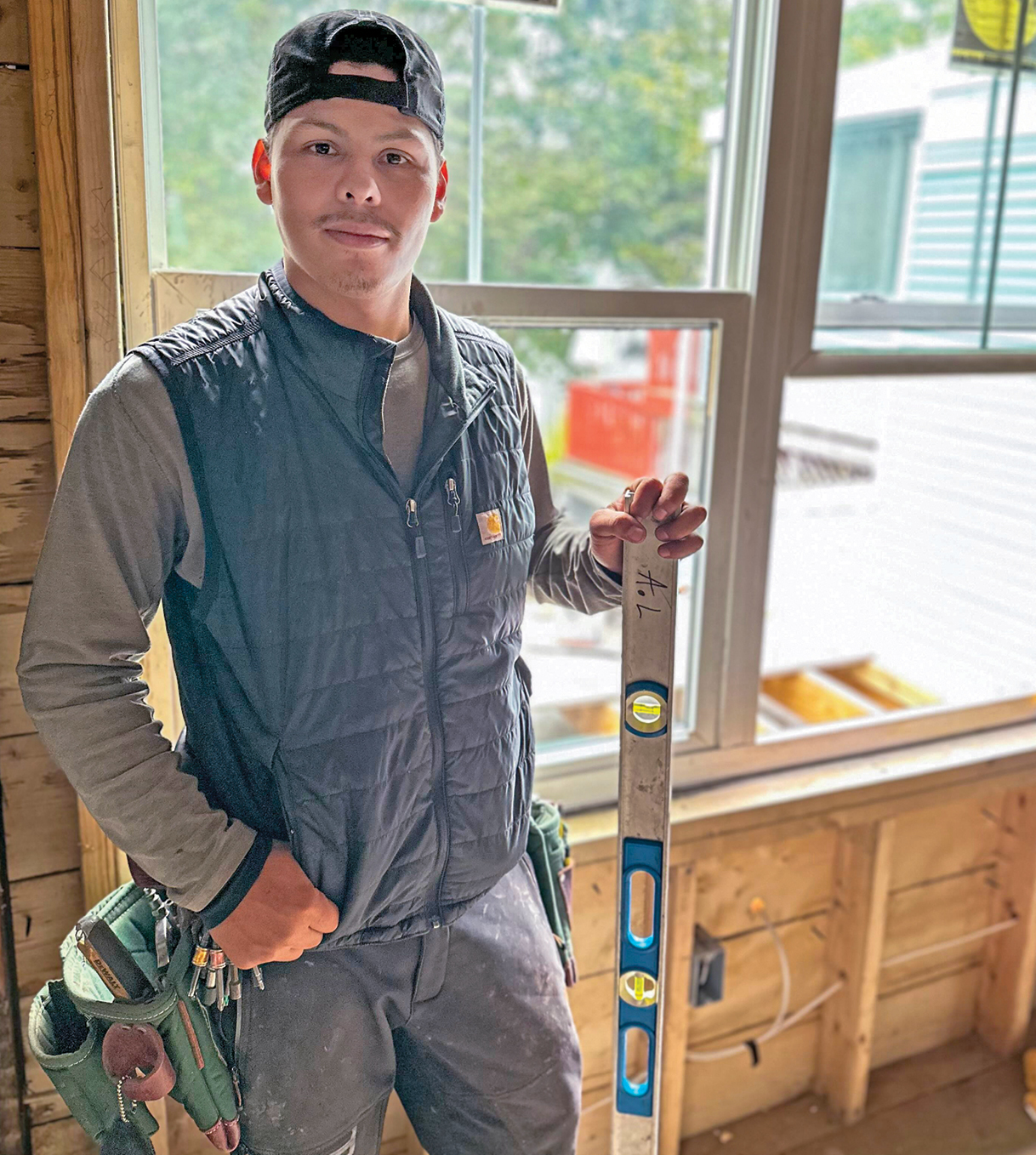
Now, at age 23, I own and operate my own construction company with several employees framing new houses and additions, roofing, decks, kitchens and bath renovations. If you had asked me back in 9th grade if this was possible, I would have said no. However, the carpentry program provided me with the support, skills and confidence I needed to succeed. It wasn’t just about learning carpentry. It was knowing I could overcome challenges and build a future for myself.
My high school’s CTE program showed me that hands-on learning, mentorship and perseverance can change your life. I’m proud of what I’ve accomplished so far, and I’m excited about what’s next — earning more certifications, growing as a carpenter and leading my business.
Andy Perez is owner of A.L. Carpentry in Somerville, Mass.
Advertisement
Advertisement



Advertisement
Advertisement