How Do You Turn a Birth Through Grade 3 Vision Into Action?
September 25, 2026
Author
Most school districts already recognize the importance of early learning. The harder question is how to organize around it.
How do districts translate a birth through Grade 3 vision into action across the people and settings that shape children's learning?
More than a decade of learning alongside eleven school districts has led us to five shared commitments: align, center, reach, partner, and reflect. Together, they provide a common direction for how people across roles and settings work to support children's learning and development.
The goal isn't to make every setting the same. It's to create enough connection across settings and developmental stages that children's experiences build on one another over time.
Our framework puts that shared direction into practical terms, showing how those commitments can shape action across leadership effectiveness, instructional excellence, and family and community partnership.
ALIGN: Connect What Surrounds the Child
A child's learning moves across home, child care, preschool, school, and community settings. Children carry their experiences, relationships, and learning with them, even when the adults and systems surrounding them operate separately.
The goal isn't to make every setting the same. It's to create enough connection across settings and developmental stages that children's experiences build on one another over time.
CENTER: Know the Child and Build from There
Every child brings knowledge, skills, interests, experiences, and ways of approaching learning. Centering means coming to understand each child as a learner, then bringing that understanding together with what adults know about learning and development and what children are working toward to shape and extend what comes next.
The question becomes: What do we know about this child as a learner, and how can we build from there?
REACH: Pay Attention to Who Is Benefiting, and Respond
Strong opportunities only matter if children and families can access, participate in, and benefit from them.
REACH shifts the question from “What do we offer? to “Who is actually benefiting?” When a child or family isn't receiving the help they need, adults look closely at what is getting in the way and change support, resources, or conditions in response.
PARTNER: Ensure Families and Communities Help Shape the Work
Families and communities hold knowledge, relationships, and perspectives that schools cannot develop on their own.
Partnership goes beyond communicating with families or inviting them to school events. It means creating meaningful opportunities for families and communities to influence priorities and decisions. Their knowledge and perspectives have real influence over what happens next, helping shape priorities, decisions, and the everyday work of supporting children and families.
REFLECT: Build Learning into the Work
Building a birth through Grade 3 system requires adults to keep learning together as the work evolves. Adults need regular opportunities to learn together, examine their practice, try new approaches, and adjust based on what they are learning.
Reflection makes improvement continuous. It helps promising practices grow stronger over time rather than depending on a particular initiative, leader, or moment.
What Happens When the Commitments Work Together?
Imagine a district identifies Kindergarten transition as a priority.
A district might begin with Kindergarten registration or an orientation night. Those can be valuable activities, but looking at the transition through the five commitments reveals a larger system.
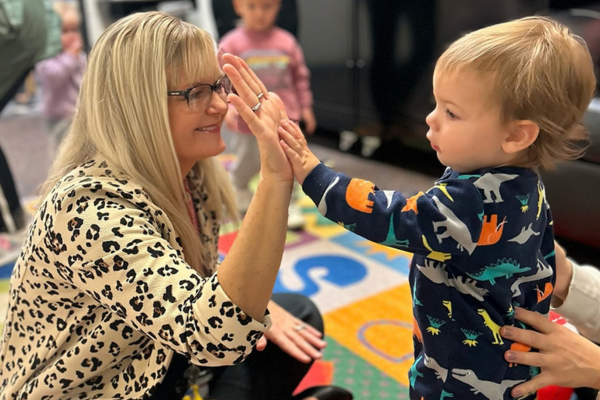
ALIGN asks how children's experiences connect across home, child care, preschool, and kindergarten. CENTER asks what we know about each child as a learner, what they are ready to learn next, and how Kindergarten can build from there. REACH asks who isn't participating in transition opportunities or getting what they need, and what adults should change in response. PARTNER asks whether families and child care providers are simply receiving information or whether their knowledge and perspectives are helping shape the transition. REFLECT asks what adults across these settings are learning together and how they will use that learning to make the next transition stronger.
Kindergarten transition becomes more than a single event. It requires leadership decisions, instructional collaboration, family and community partnership, and ongoing learning across the people and settings surrounding children.
That is what it means to approach early learning as a system.
Early Childhood and Elementary Education Inform One Another
Taken together, the five commitments point toward an important shift in how we think about the birth through Grade 3 continuum.
The School as Hub approach is not about bringing early childhood into K-12 schools. It is about creating a birth through Grade 3 system in which early childhood and elementary education inform one another. Neither one is the starting point. Neither one is an add-on to the other.
Creating quality, continuity, and opportunity from birth through Grade 3 doesn't require every district to take the same path. It requires us to keep asking how we can align, center, reach, partner, and reflect in ways that make that path more connected for every child and family.
Early childhood programs benefit from stronger connections to the schools children will enter. Elementary schools benefit when what we know about how young children learn continues to shape instruction, relationships, and family partnership through the primary grades. Creating continuity requires movement in both directions.
Learning from Example
When superintendents join us in Omaha this fall for AASA's Early Learning Cohort, we will continue to ask questions and learn from other districts engaging deeply in this work. Our districts won't offer a single model to replicate. They'll offer something more useful: examples of how leaders have used a common approach to understand their own context, take action, learn, and keep building.
I hope participants leave with ideas, but more importantly, with a different way of looking at their own systems.
Creating quality, continuity, and opportunity from birth through Grade 3 doesn't require every district to take the same path. It requires us to keep asking how we can align, center, reach, partner, and reflect in ways that make that path more connected for every child and family.
Read the other posts in this series:
Amy Schmidtke is director of educational practice at the Buffett Early Childhood Institute at the University of Nebraska. In her role, she conceptualizes and leads approaches to reducing opportunity gaps in early learning and education settings, birth through Grade 3.
Join district leaders nationwide who are transforming early childhood education
AASA’s Early Learning Cohort equips district leaders with research-backed strategies, peer learning, and expert guidance to strengthen early childhood education in their schools. If you’re committed to preparing every student for success — in school and in life — the early years is where that work begins.
Subscribe to AASA's Blogs
Subscribe via RSS feed below. Learn more about RSS feeds here.