
What Happens When 11 School Districts Decide to Learn Together?
July 28, 2026
Author
Eleven superintendents. One vote. Zero dissents.
That is how the Superintendents’ Early Childhood Plan began in June 2014, when the superintendents of every district in Douglas and Sarpy Counties in Nebraska sat down together and agreed to do something they had never done before: build an early childhood strategy as one Omaha-area region rather than as 11 separate school systems.
More than a decade later, the plan still includes all 11 districts and reaches thousands of children each year.
It is my privilege to lead that initiative today. But I did not build the trust that made it possible. That work started over a decade ago, and the how matters as much as the what.

A Mandate, Not a Mission
The plan grew out of a mandate. In May 2013, the Nebraska Legislature passed LB 585, directing a fairly new entity, the Learning Community of Douglas and Sarpy Counties, to work with the region’s school superintendents to create a plan to close achievement gaps for children living in high concentrations of poverty.
A month later, the newly formed Buffett Early Childhood Institute at the University of Nebraska opened its doors, and the 11 superintendents invited us to help them figure out what that plan—incorporating high-quality early childhood programming —should actually look like.
That distinction matters. A law can require districts to cooperate. It cannot require them to trust each other, share what isn’t working in their buildings, or agree on shared goals. That part had to be built.
Nebraska's statute created the occasion, not the method. What districts built afterward drew on research every city and state already has access to: what strengthens early learning, what makes family partnerships work, what durable systems require. The law opened a door. The process of walking through it together is what any group of districts can replicate.
What It Took to Say Yes
From January through June 2014, the Institute convened a workgroup of the 11 superintendent appointees. By listening more than presenting, we shaped a plan that reflected what districts actually needed.
Part of what made unanimous approval possible was a plan scaled to need, with three levels of support:
Customized Assistance, tailored consultation to help districts build their own early childhood capacity, would be available to all 11 districts regardless of poverty rate.
Specialized Professional Learning opportunities would reach early educators and providers across the region.
The most intensive layer, School as Hub programming, would concentrate on the schools with the highest poverty levels.

That structure meant every superintendent could see their district in the plan.
By June, the superintendents voted unanimously to approve it. The following month, five of them attended a meeting of the Learning Community’s governing body, the Coordinating Council, speaking in support of a plan that would change how their districts operated and prioritized early childhood education.
Then-Millard Public Schools Superintendent Jim Sutfin called it a “game changer” when details were announced in January 2015. He wasn’t describing a curriculum or a grant, but a shift in how districts had decided to relate to one another: as partners solving a shared problem rather than as rivals.
Building Trust One Year at a Time
Implementation began that September.
In the ensuing years, districts never wavered in their support and continued to shape the plan, with superintendents backing extensions in 2017 and 2021. Each renewal became an occasion to listen and evolve the work.
In June 2025, the Learning Community Coordinating Council unanimously approved another four-year renewal, carrying the plan through the 2028–29 school year. All 11 superintendents signed an op-ed voicing their support.
That same period brought more growth—and evidence our efforts were working. Across School as Hub sites, the share of students missing 20 or more days of school a year fell from 18 percent in 2020–21 to 13 percent in 2023–24, a steeper drop than either Douglas County or the state of Nebraska posted over the same years.
Recognizing the clear benefits of the School as Hub approach, Omaha Public Schools has expanded its participation. With two more sites joining in fall 2026, School as Hub, the plan’s most intensive tier, will reach approximately 4,600 children across 18 elementary schools in six districts.
What Collaboration as Strategy Actually Requires
When people ask what made this work, I point to three things that had nothing to do with curriculum or funding formulas.
Someone had to convene, not dictate. The Institute didn’t arrive with a finished plan; it facilitated a workgroup that shaped the plan to serve the community while responding to each district’s needs.
Leaders had to show up publicly, not just privately. A private nod costs a superintendent nothing. Five superintendents standing up at a council meeting, or 11 signing an op-ed a decade later, is what makes it durable.
Renewal had to be a choice, not a default. Every three or four years, this plan comes back to the table for another vote. That iterative development and repeated decision-making are what separate a mandate from a movement.
Superintendents joining our AASA early learning cohort site visit this fall will see these fingerprints throughout the presentations, discussions, and a visit to Douglas County West Elementary, a School as Hub site.

They'll hear it directly from DC West Superintendent Melissa Poloncic.
"The School as Hub model has become the fabric of our school,” she said. “Intentional consulting, focused coaching, and data-driven professional development have made a grand impact on our teachers, students, and families. As a result of our work, we have strengthened instructional practices, grown an understanding of teaching the whole child through best practice, and increased family involvement."
The 11 districts look nothing alike, but they are working from a shared framework while adapting it to their own communities.
That is not an accident.
It is 11 years of choosing collaboration.
In our next post, we’ll dig into what we’ve learned about building the systems that keep partnerships like this working.
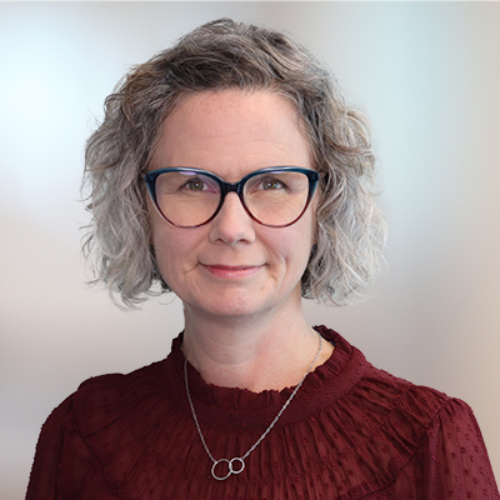
Amy Schmidtke is director of educational practice at the Buffett Early Childhood Institute at the University of Nebraska. In her role, she conceptualizes and leads approaches to reducing opportunity gaps in early learning and education settings, birth through Grade 3.
Join district leaders nationwide who are transforming early childhood education
AASA’s Early Learning Cohort equips district leaders with research-backed strategies, peer learning, and expert guidance to strengthen early childhood education in their schools. If you’re committed to preparing every student for success — in school and in life — the early years is where that work begins.
Subscribe to AASA's Blogs
Subscribe via RSS feed below. Learn more about RSS feeds here.


