
To Be Counted...Or Counted On
November 01, 2026
President's Corner
What motivates a child to go to school?
When I think about what motivated me, I remember teachers like Kathleen Bradford. She told me I was smart. She told me I was capable. Most importantly, she helped me believe that my future could be filled with hope.
For a child growing up in a home marked by poverty and abuse, that hope became fuel for my future. Ms. Bradford showed up every day, and because she did, I had one more reason to show up, too. Her classroom was more than a place where I received instruction. It was a place where I was seen.
I also remember Coach Murphy, who deeply influenced the direction of my life.
As 6th-grade girls sometimes do, my friends and I decided that our PE coach was not our favorite. I am sure our attitude was reflected in how we responded to her. When it was time to select athletics for 7th grade, the gateway year for students who hoped to become high school athletes, the coach refused to sign my form.
The following school year, I was in PE shooting hoops when Coach Murphy noticed me. She saw potential. She saw talent. She saw something in me that another adult had overlooked. She insisted that I change my schedule and join athletics.
I cannot say with certainty where my path would have led without her intervention, but I know that moment changed me.
Being part of a team taught me responsibility and accountability. It taught me that I could show up and be counted. More importantly, it taught me that I could be somebody others counted on.
Because it is one thing to be counted. It is another thing to be counted on.
That distinction matters as school systems across the country work to improve student attendance. We must continue addressing the barriers that keep students from school, including health concerns, transportation challenges, family responsibilities, housing instability and other circumstances beyond a child’s control.
But removing barriers is only part of the work. We must also ask a more fundamental question: What are students coming to school for?
When students have a sense of belonging, they show up differently. When they know someone will notice their absence, they understand that their presence matters. When they are part of a team, club, performance, project or classroom community that depends on them, school becomes more than a place they are required to attend. It becomes a place where they are needed.
In Aldine, we use strategies from Doug Lemov’s Teach Like a Champion program to help create that sense of belonging. One of those strategies is Threshold. The concept is simple: Teachers stand at the classroom door and personally greet students as they enter rather than remaining behind a desk or waiting for class to begin.
That small interaction can make a significant difference.
Threshold helps teachers build relationships, set the tone for learning, check in with students and reinforce expectations. Most importantly, it communicates a powerful message: You belong here. We are glad you are here. What you bring to this classroom matters.
As we enter this season of Thanksgiving, I encourage every educator and school system leader to consider what we are giving our students each day.
Let’s give them meaningful relationships. Let’s give them classrooms where they feel safe, challenged and known. Let’s give them teachers like Ms. Bradford and Coach Murphy who see possibilities in them when they cannot yet see it for themselves.
That is what champions for public education do. We see students. We call out their potential. We create places where they belong. We help them connect today’s attendance with tomorrow’s possibilities.
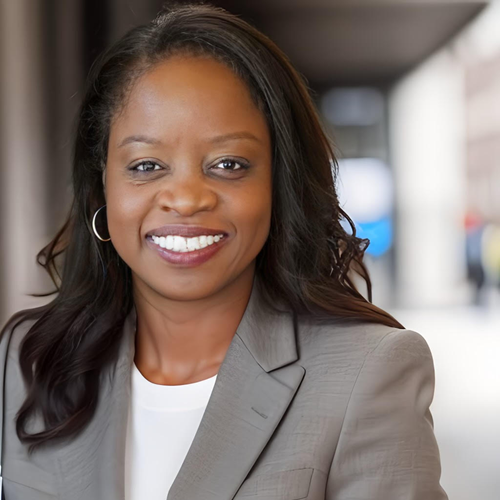
LaTonya M. Goffney is AASA president for 2026–27.
Author
Advertisement
Advertisement


Advertisement
Advertisement