
Lighthouse Research: Boards Spending Time on the 'Right Stuff'
October 01, 2015
When Superintendent Terry Hemann was about to move to Spencer, Iowa, from another state in 2011, he knew the board/superintendent culture he would inherit differed markedly from what prevails in many school districts. During his candidate interview, school board members talked about their ongoing participation in board development activities.
The school board’s commitment made an impression on Hemann, and it wasn’t long before he contacted the Iowa Association of School Boards to learn about the Lighthouse Research referenced by the board members and options to consider for continuing involvement.
The Lighthouse Research, conducted over 10 years by IASB, provides several insights about the role of board/superintendent teams in affecting student performance. Here’s one intriguing observation: A trusting relationship between the board and superintendent appeared to be necessary but in and of itself was not enough to influence student learning. In other words, in addition to building mutual trust, the board and the superintendent must leverage that relationship to form habits to stay focused on improved teaching and student learning.
Some of the habits that emerged from the Lighthouse Research include designating board-agenda or work-session time to receive and discuss progress reports about key school district initiatives, to learn about supports for quality teacher professional development and to study student learning data more than once per year. Additional habits at the board table include regularly reinforcing a strong commitment to district goals, belief in the ability of the staff to achieve the goals and willingness to lend support, such as increased time for staff collaboration, to reach the goals.
Influential Factors
Several elements referenced by the Lighthouse Research seem to be making a difference in the leadership of board/superintendent teams in Iowa. And similar observations about applying the Lighthouse Research have been reported by state school board associations in Connecticut and Oregon.
Four elements are particularly relevant.
1. Learning together at the board table.
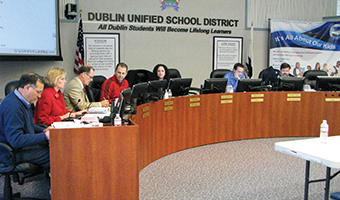
In Spencer, an Iowa district with about 2,100 students, the five-member school board added work sessions to learn about priority initiatives, support for successful implementation and impact on student learning. These 60- to 75-minute meetings provide a format for the board/superintendent team to discuss progress reports with administrative/teacher leadership on two key district initiatives: cognitively guided instruction (elementary) and authentic intellectual work (middle/high school).
In Decorah, a district in northeast Iowa with nearly 1,800 students, the board/superintendent team added work sessions to meet with its district leadership team. The board also designated time during regular board meetings for learning. Initially, these interactions helped board members learn about curriculum mapping and technology. “As board understanding about these initiatives grew, conversations shifted toward staff recommendations to strengthen implementation of initiatives and support needed from the board,” says Superintendent Mike Haluska.
In both Spencer and Decorah, staff and community routinely witness board/superintendent learning. Reserving distinct time for learning separates it from the pressure of voting.
Regular board meeting agendas often include multiple items, pressuring the governing body to keep discussions and the agenda moving. While this is important for efficiency, it may lead to inadequate whole-board learning time for some topics. To counter these pressures, some board/superintendent teams find it helpful to focus more intentionally on teaching and student learning at a board work session. Other teams increase time during regular meetings for instructional topics and reduce time for nuts-and-bolts items or move the board’s learning topics to the front end of the meeting agenda.
2. Growing the accountability and the working relationships.
In Spencer, the board/superintendent work sessions connected them directly with teacher/principal leaders on student learning goals, the priority district initiatives at the elementary and secondary levels, and professional development. The board president, Bob Whittenburg, says these opportunities reinforce the joint commitment. “Improving instruction is the key to strengthening student learning and these meetings help our staff know how strongly we value and support this work,” he says.
In Decorah, the board/superintendent tandem also values meetings with teacher/principal leadership. Melanie Tietz, a past board president, says they “convey … our commitment to the district’s improvement process.”
The expectation of progress reports by staff leaders raises accountability. As another board member said, “Just the act of meeting regularly reinforces accountability without appearing to be threatening.”
3. Raising understanding of professional development’s value.
The board, superintendent and staff leadership in Spencer recognize the board’s role is not to learn how to teach a cognitively guided lesson or score an activity relating to authentic intellectual work. However, they realize the better the board/superintendent team understand key elements of this professional development, the more effectively they can discuss the progress reports, make decisions about support and advocate.
Staff representatives have provided board members with understanding of the district’s instructional initiatives through watching and discussing short video clips of students solving tasks and teacher teams collaborating to score lessons. This learning solidified useful insights into the magnitude of change the district is pursuing and resulted in tangible support for cognitively guided instruction and authentic intellectual work, notably by “staying the course” over multiple years; approving more time for training and teacher collaboration; adding instructional coaches; and identifying “talking points” for community advocacy.
Similar benefits were felt in Decorah, leading to greater board support.
In addition, the board/superintendent teams have sharpened and strengthened the questions asked of staff about the support they need:
- How can the board best support staff to continue moving forward?
- What are the roadblocks in this work and staff strategies for working around these roadblocks?
4. Studying and interpreting the meaning of data.
Although the board/superintendent teams in Spencer and Decorah recognize there is more to student learning than test scores, they value this information. They invest time to review and understand data more than once per year.
They learn about student achievement at the board table from both formative and summative data. Rather than wading through the information, they seek administrative/staff observations and recommendations on which data will most influence their decision making. They also allocate time during work sessions to study data, ask for clarification and discuss their observations with staff leadership. They support a culture that focuses discussions on next steps identified by the staff in response to the data.
Author
Harry HeiligenthalAdvertisement
Advertisement


Advertisement
Advertisement