The Strategy of Trust: Reimagining Family Engagement in Public Education
March 26, 2026
Author

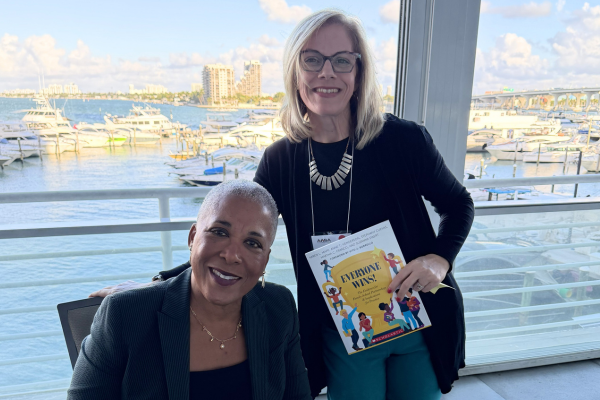
In education, we often talk about family engagement as something schools should improve. At the Rooted in Relationships Summit hosted by AASA in Miami, Florida, I was reminded that the most effective systems do not treat family engagement as a program or an initiative. They treat it as a strategy—one that shapes how schools build trust, design systems, and ultimately improve outcomes for students.
I serve as the Director of Early Childhood Education at the Delaware County Intermediate Unit (DCIU) in southeastern Pennsylvania, just outside of Philadelphia. Delaware County is home to more than 575,000 residents and is one of the most diverse counties in the region. At DCIU, we serve as the premier provider of early childhood services across the county, delivering Early Head Start, Head Start, Pre-K Counts, and Early Intervention programming. Through these programs, we support more than 4,000 young learners and their families each year. In early childhood education, the connection between families and schools is not a peripheral element of our work—it is the foundation upon which children’s learning and development are built.
In early childhood education, the connection between families and schools is not a peripheral element of our work—it is the foundation upon which children’s learning and development are built.
Miami-Dade's Blueprint for Community-Centered Education
One moment during the summit that reshaped how I think about family and community partnerships came from learning about the work of Miami-Dade County Public Schools. As district leaders described their system, it became clear that strategic planning there is not simply a document—it is a strategy that guides how the district operates. From Early Head Start and magnet preschool programs to Career and Technical Education pathways that connect students to employment opportunities within their own communities, Miami-Dade has intentionally built an ecosystem where education, workforce development, and family engagement are deeply connected.
What stood out most was how family engagement was positioned. It was not described as an initiative layered onto existing work. Instead, it was embedded throughout the system as a driver of decision-making. Their “grow your own” mindset reflected a commitment to investing in the people within their community—students, families, and educators alike.
Trust-Based Engagement Starts with Listening
The summit also featured keynote speaker Dr. Karen Mapp of Harvard University, whose research has shaped the national conversation around family engagement. Dr. Mapp emphasized that authentic partnerships with families must move beyond communication or events. Trust-based engagement requires schools and families to share responsibility for student success and to build relationships grounded in mutual respect and collaboration.
In practice, trust-based relationship building begins with listening. It means creating opportunities for families to participate in decisions that affect their children and recognizing the expertise they bring to the educational partnership. When schools demonstrate transparency, consistency, and respect for family voice, relationships deepen and trust grows.
In early childhood programs, the results of strong family engagement are visible. When families feel connected to their child's learning environment, children arrive at school with greater confidence, stronger language development, and a deeper sense of belonging. Families reinforce learning at home, and educators gain critical insight that helps them better support each child's development.
Strengthening the Circle of Support
One area of reflection for me following the summit is the opportunity to strengthen engagement with fathers and father figures. In many early childhood settings, fathers remain an underrepresented voice in family engagement efforts. Yet when fathers are actively involved in their children’s learning, the impact on students can be profound. Children often demonstrate increased confidence, stronger social-emotional development, and a deeper connection between home and school. Expanding intentional opportunities for fathers to participate in early learning environments has the potential to strengthen family partnerships and broaden the network of support surrounding every child.
When families feel connected to their child's learning environment, children arrive at school with greater confidence, stronger language development, and a deeper sense of belonging.
Another important takeaway from the summit is the role that strong partnerships play in shaping public trust in education. Schools do not operate in isolation. When families, educators, and community partners work together with a shared purpose, schools become trusted institutions within their communities. The work happening in Miami-Dade demonstrated how aligning families, schools, and workforce opportunities can create a system where communities see education as responsive, collaborative, and deeply connected to their future.
For education leaders across the country, the lesson is clear: family engagement cannot remain a secondary initiative or an occasional effort. It must become part of the strategy itself. When we center families, build trust intentionally, and strengthen partnerships across our communities, we create systems that not only improve student outcomes but also restore and sustain public confidence in public education.
The relationships that change outcomes starts here.
Take the next step with AASA's Authentic Family Engagement Certificate Program and Early Learning Cohort — collaborative learning cohorts designed for leaders ready to do this work with intention.
Save the Date! April 14 - 16, 2027 - AASA's Rooted in Relationships Summit is heading to Albuquerque Public Schools