Show Me What Changed for the Child
November 19, 2026
Author
If students had to put their phones away, Sonia said, their teachers should, too.
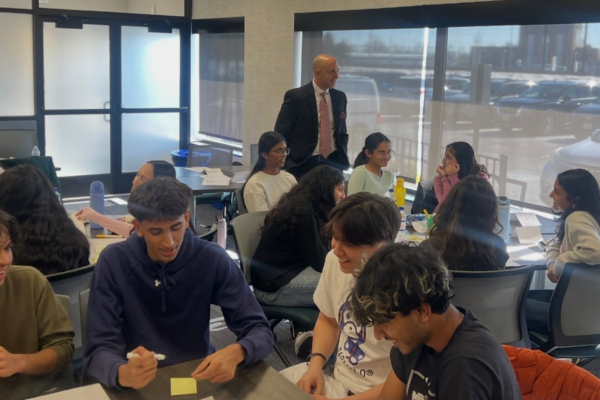
Sonia, a former student member of our Board of Education, was speaking at a meeting of Vallejo's Strategic Planning Advisory Committee. She asked us to think about what we expected of students during a lesson. We wanted them to pay attention and stay engaged. They needed the adults in the room to do the same. She asked us to consider what it feels like when a teacher sits behind a desk grading papers while students wait for instruction.
I felt dread because students should be able to count on an attentive teacher every day. My first instinct as superintendent was to fix it right then.
I also felt validated. For two years I had been telling our board and leadership team that we needed to recruit, hire, develop and retain effective educators. The third principle of AASA's Public Education Promise, “Attract, Hire, Retain, and Reward the Best People,” captures that responsibility. Almost everyone can recall an educator who changed their life. Why should a student's chance to encounter one depend on luck? For a student sitting in class, our workforce decisions come down to who's in front of them today and what that person helps them learn.

In "The Burden of Stewardship," I wrote about the responsibility of making painful decisions to stabilize a district. In "What Am I Building?," I wrote about taking responsibility for the organization that emerged from those decisions.
We closed schools and reduced positions so we could direct more of our resources to the schools students would attend.
Sonia gave me a way to judge that work.
What could a student count on when they walked into class?
Staffing Is an Instructional Decision
In Vallejo, we've hired many teachers early in their careers. They bring energy and commitment, and we invest in helping them grow. When an educator leaves for higher pay or better working conditions just as they're becoming more effective, the school has to start building those relationships again. A principal has another teacher to support. Students have another adult to get to know.
I want accomplished teachers, including those who already live in Vallejo and teach elsewhere, to see our schools as places where they can build a career.
When we hire, I want us to look for evidence that a teacher has helped students grow and can explain what they did when students struggled.
Keeping those teachers means asking what working here is like.
Can they get useful feedback from a principal? Do they have time to plan with colleagues? When they ask the district office for help, do they get it in time to use it?

We sometimes talk about those questions as if they belong to different departments. A teacher experiences them all in the same week.
As superintendent, I'm responsible for making sure the people who control staffing, schedules, dollars and professional learning are working toward the same outcome for students.
Work Backward From the Child
I've often heard superintendents described as the instructional leaders of their districts. I've used that description myself.
But what does it actually mean?
I don't teach kindergarten reading lessons. I don't personally coach every teacher or lead every professional learning community. We have talented instructional leaders, principals, coaches and teachers whose expertise is essential to that work.
My responsibility is to make sure the organization creates the conditions for them to succeed.
In Vallejo, strengthening early literacy has become one of our instructional priorities. Our first graders have made meaningful progress in reading simple words, but too many are still falling short of our year-end reading-fluency benchmark.
That tells us something important. Our students are learning, but we aren't yet getting enough of them where they need to be.
Our K–1 Promise establishes clear expectations for foundational literacy skills. By the end of kindergarten, students should know their letter names and sounds and be able to read simple words. By the end of first grade, they should be developing the fluency necessary for increasingly complex reading.
A teacher can return from a workshop ready to try something new the next morning. Whether that practice takes hold depends partly on what the rest of the organization does.
Then we work backward.
What must teachers know and be able to do? What support do principals need? What professional learning will strengthen instruction? And how will we know whether children are actually benefiting?
We're investing in coaching, opportunities for teachers to observe one another, and time for teams to examine student work. That includes strengthening literacy instruction for students with disabilities.
But professional learning alone doesn't change classrooms.
A teacher can return from a workshop ready to try something new the next morning. Whether that practice takes hold depends partly on what the rest of the organization does.
If we want teachers to observe colleagues, someone has to cover their classrooms. If we expect principals to provide meaningful instructional feedback, they need time, training and a shared understanding of effective practice.

This is where the superintendent's instructional leadership becomes real.
Our expectation in Vallejo is simple: District management exists to serve schools. Schools exist to serve students.
That means Human Resources, Business Services, Operations, Educational Services and every other department must understand how their work contributes to what happens in classrooms.
It sounds straightforward. It isn't always easy.
We still find ourselves responding to crises that consume time and attention. Some are unavoidable. Others expose organizational systems that need improvement.
But we cannot allow the urgency of running a district to continually displace the purpose of running it.
What Students Can Count On
When families consider transferring to neighboring districts, concerns about safety and academic rigor come up again and again.
They want their children to feel safe, to be challenged and to know that the adults at school are paying attention.
I understand those expectations. I share them.
We can describe our organizational improvements, explain our financial recovery and outline our instructional priorities. But families will ultimately decide whether we're delivering on our promises based on what happens to their children each day.
That's the tension I carry as superintendent. Meaningful organizational change takes years. A child's need for excellent instruction is immediate.
The changes we're making will take time.
A child gets one first-grade year.
While we work to build a more stable workforce and strengthen instruction, that child is already in a classroom, trying to make sense of the words on the page.
That's the tension I carry as superintendent. Meaningful organizational change takes years. A child's need for excellent instruction is immediate.
I want the next student who sits down with our planning committee to tell us what changed in their classroom.
I want them to say their teacher noticed when they were stuck, helped them get better and gave them something harder to try.
Because stabilizing a district is not the same as improving the educational experience of its students. Building a stronger organization matters only if that strength reaches the classroom.
Don't tell me how much we spent. Show me what changed for the child.
Subscribe to AASA's Blogs
Subscribe via RSS feed below. Learn more about RSS feeds here.