What Am I Building?
October 15, 2026
Author
I asked everyone in the room who was either new to Vallejo City Unified School District or new to their leadership role to stand.
Roughly a third of the room rose.
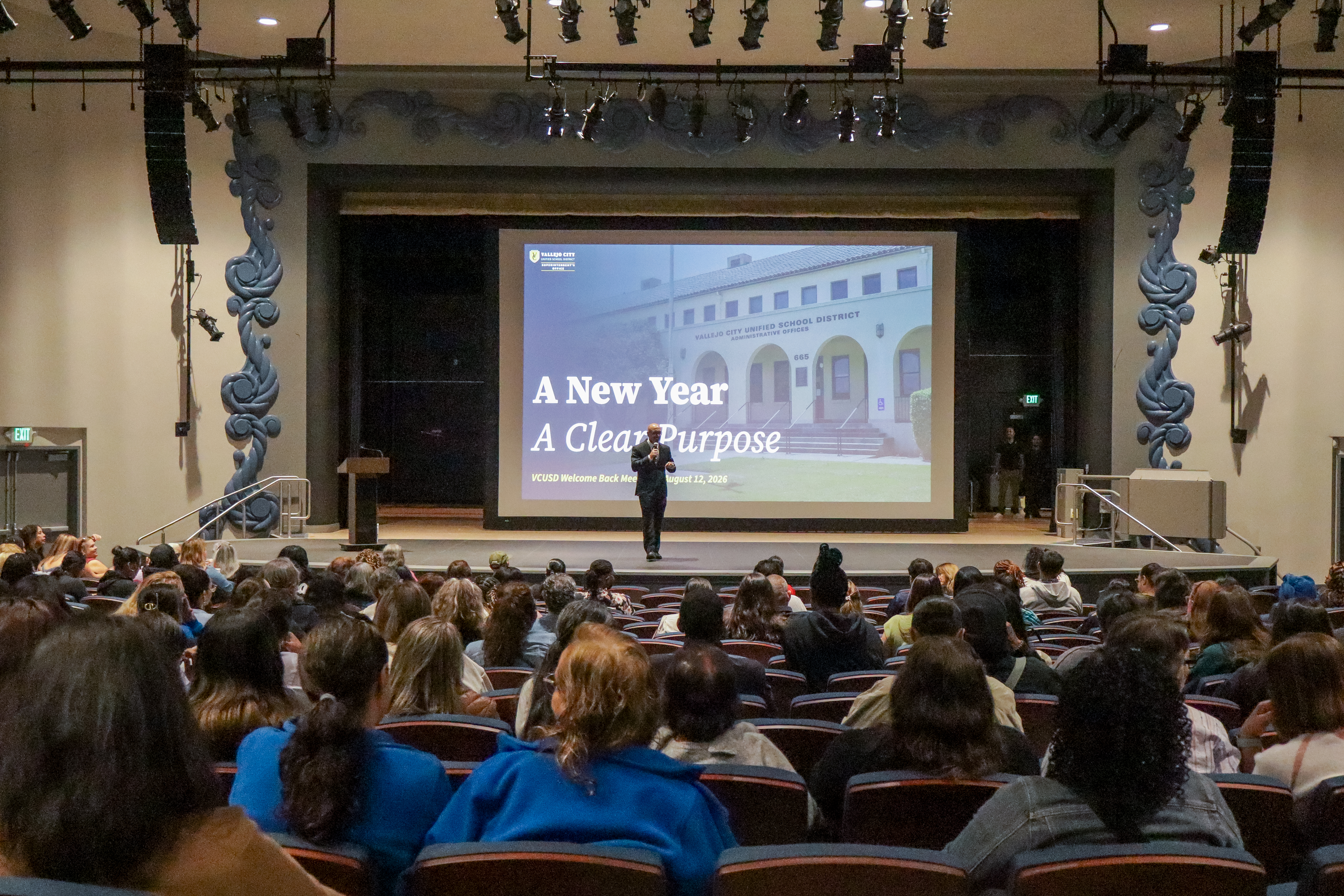
I looked around at new principals, new district leaders, and veteran employees taking on new responsibilities. In two short years, we had substantially changed the management structure of our district.
I should have felt exhilarated.
Instead, for a moment, I felt something closer to dread.
During my first two years as superintendent, I inherited enormous challenges: fiscal instability, declining enrollment, organizational systems in need of rebuilding, school closures, right-sizing, and difficult personnel decisions.
I owned those challenges from the moment I accepted the superintendency. But if I am being truthful, there was also a psychological cushion that came with the inheritance.
I didn't create these conditions. I was cleaning them up.
Looking around that room, I realized that the cushion was disappearing.
These were increasingly the leaders I had hired, promoted, supported, or entrusted with carrying forward our work. The organizational structure was becoming ours. The expectations were ours. The direction was ours.
The results would be ours, too.
Eventually, every leader reaches a moment when the question changes.
It stops being, “What did I inherit?” It becomes, “What am I building?”
Turning the Page Without Erasing It
I didn't tell the room I was feeling dread. They didn't need uncertainty from me that morning. They needed confidence, direction, and a reason to believe in what we were building together.
That didn't mean pretending the previous two years hadn't happened. Turning the page is not the same as tearing out the previous chapter.
Leadership has to help people shift their attention from what happened to us toward what we are going to build together.
Our organization had been through significant change. Schools had closed. Positions had been eliminated. People had left. Employees and students had moved between campuses. Leaders had been asked to carry difficult messages back to their communities.
There was real loss associated with those decisions. But organizations cannot live permanently in recovery.
At some point, leadership has to help people shift their attention from what happened to us toward what we are going to build together.
We weren't forgetting the past. We were accepting responsibility for the future.
Trust Is Not Assurance
As I looked around the room at so many new leaders, another realization came. Did I trust them? Not completely.
Trust has always come naturally to me. My instinct is to believe in people, give talented leaders room to lead, assume positive intent, and make myself vulnerable enough for genuine relationships to develop.
Experience has complicated that instinct.
Earlier in my leadership journey, I painfully learned that what a leader experiences relationally isn't always an accurate reflection of what is happening organizationally. I had trusted people close to me without adequately verifying what was happening beneath the surface.
That experience could have made me cynical. I have tried not to let it.
Instead, it taught me a distinction I carry with me today: Trust is something I give. Verification is something I owe the organization.
I can trust a principal and still examine student outcomes. I can trust a cabinet member and still expect evidence of progress. I can empower a department leader while still spending time with the people that the department serves.
Accountability isn't the opposite of trust. In healthy organizations, the two reinforce each other.
My responsibility isn't simply to surround myself with people I believe in. It is to establish the expectations, systems, feedback, and support that allow those people to succeed—and allow us to know whether they are succeeding.
From Individuals to a Leadership System
That is why alignment became such an important part of our opening work.
Our governing board establishes priorities. Those priorities inform my goals as superintendent. Those goals connect to our strategic plan and Local Control and Accountability Plan. Departments must then understand how their work contributes to those priorities, and schools must be able to see the connection between district direction and their individual school plans.

Alignment can sound bureaucratic when described on paper. In practice, it is exactly the opposite.
Alignment allows hundreds of individual decisions to move an organization in the same direction.
A transportation director should understand how their work affects student success. So should a human resources leader, a principal, a fiscal manager, a communications professional, and an instructional leader.
Different responsibilities. Same destination.
We reinforced another simple expectation that morning: district management exists to serve schools, and schools exist to serve students.
Organizational charts tend to place the superintendent at the top. I've increasingly come to believe the organization works better when we imagine that chart turned upside down.
Central office leadership doesn't exist so that schools can serve the district. We exist to remove barriers, provide resources, develop people, create coherence, and make it easier for educators closest to students to do extraordinary work.
Managers don't simply oversee programs. They develop people. They observe. They coach. They give feedback. They establish standards and hold people accountable to them.
Our human resources team uses a simple phrase: “Glow, grow, or go.” Our responsibility is to create conditions where employees can glow. When they aren't there yet, we help them grow. And sometimes, despite support and opportunity, someone simply isn't right for the organization or for the students we serve.
Accountability without support is punitive. Support without accountability is avoidance. Our students deserve neither.
Accountability without support is punitive. Support without accountability is avoidance. Our students deserve neither.
The Team We Chose to Build
Building that team wasn't nearly as orderly as the photograph we would take later that day might suggest.
Three weeks before the beginning of school, one of our newly selected principals let us know she would not be joining us after all. She was facing a personal health challenge, and after conversations with her family, she made the difficult decision to remain where she was and focus on her treatment.
There was nothing to question about her decision. Family and health had to come first. But the timing created an immediate leadership challenge for us.
The school she had been selected to lead was among the most affected by the changes taking place across our district. Students and staff were coming together in new configurations. The community needed stability. This wasn't a school where we could afford to place someone in the principal's chair simply. We needed a proven leader—and we needed one quickly.
So we went to work.
Our team reached into every network we had. We called colleagues. We contacted people we trusted. We asked others to ask people they trusted. We talked about what was happening in Vallejo and why this particular leadership opportunity mattered.
Our network responded.
Ultimately, we connected with a veteran principal who had spent the previous several years working as a consultant. She had already experienced success as a school leader and was ready for the next phase of her own leadership journey—a return to the school site.
Within weeks, an unexpected vacancy became an opportunity to bring an experienced leader into one of the schools that most needed that experience.
That shouldn't have happened because we made enough phone calls. It reminded me that an organization's reputation matters.
For two years, we had been telling a story about where Vallejo was headed. We had been building relationships, developing leaders, recruiting people, and asking others to believe that something worth being part of was taking shape here.
In that moment, our leadership network became organizational capital.

The strongest organizations don't begin building relationships when they suddenly need something. They invest in relationships long before the moment of need arrives.
Later that day, we gathered the management team together for a photograph.
I am proud of that picture.
When I look at it, I see one of the most diverse leadership groups in our organization—one that is remarkably representative of the students and families we serve.
That did not happen by accident. It was intentional.
Representation matters to me. Students should be able to look throughout their school system—not just into classrooms, but into principal offices, district departments, and executive leadership—and see that leadership is possible for people who look like them and come from communities like theirs.
But representation cannot be the finish line.
A diverse leadership team that doesn't produce better experiences and outcomes for students is simply a diverse leadership team. The promise of representation has to become performance.
We had assembled the team. Now we had to become one.
Renewal Is a Responsibility
In the days that followed, I began visiting schools. Nothing elaborate. No formal presentations. No lengthy agendas.
I wanted to see our leaders in their buildings after days of meetings and preparation. How are you? What do you need? What barrier can I remove so your team can do its best work?
Those questions matter even more in a year of renewal.
Many of our schools don't feel exactly like they did the year before. In some places, significant numbers of students and staff are new because of closures. New communities are forming. New relationships are developing. People are carrying excitement and anxiety at the same time.
We cannot announce renewal from the central office and expect everyone else to experience it on command.
Renewal has to be built.
It happens through thousands of interactions—in classrooms, staff meetings, principal offices, district departments, playgrounds, and conversations with families.
Leadership isn't about repairing what someone else built. It is about accepting responsibility for what comes next.
It requires leaders who acknowledge what people have experienced without allowing the organization to become defined by it.
And it requires something from me, too.
Two years ago, I could look at many of our challenges and explain where they came from. Increasingly, that matters less.
These are now our systems. These are our leaders. These are our expectations. And these will be our results.
Something is intimidating about losing the ability to point backward. There is also something liberating about it.
Because eventually, leadership isn't about repairing what someone else built. It is about accepting responsibility for what comes next.
I looked around that room at a third of our leaders standing and initially felt the weight of that responsibility.
Then I looked again.
And I saw a possibility.
Subscribe to AASA's Blogs
Subscribe via RSS feed below. Learn more about RSS feeds here.