Making Summer Count: Effective Data Use Helps Wake County Build Strong Summer Programs
August 19, 2026
Authors

Across Wake County Public School System (WCPSS) summer programs, we work to provide high quality learning experiences for every student, in every classroom, every day.
To reach that goal, we need to understand not only whether student outcomes improve, but also what conditions led to that improvement.
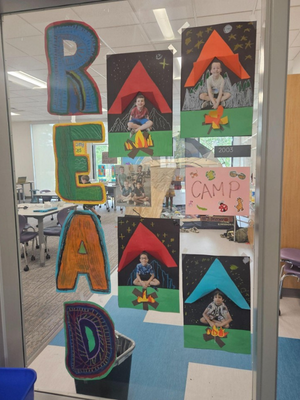
Like all North Carolina districts, WCPSS offers summer reading camps for second and third graders as required by the state’s Excellent Public Schools Act. These invitation-only camps provide at least 72 hours of evidence-based reading instruction to help students achieve reading proficiency and grade-level promotion.
At the end of each session, we report on key metrics:
- How many eligible students attended
- What percentage of students achieved proficiency
- Overall growth from end of year to end of camp
- Student retention rates; parent, student, and camp staff satisfaction rates
- Effectiveness of the literacy interventions provided to students
These metrics are important, but understanding how we reached them – and where there’s room for growth – helps us replicate and strengthen conditions for success in future summers.
In SY25-26, WCPSS joined the District Summer Learning Network to strengthen our program monitoring and outcome gathering approach. Our summer learning team joined a national network of role-alike district leaders for professional learning and expert coaching that helped us consider what data we collected, how we analyzed the data, and how we can use findings.
For summer 2026, we developed a data collection plan to inform planning, implementation, and review – all integrated into a continuous improvement framework so we can ensure program excellence during the summer and beyond.
Key steps include:
Before camp: Base school data collection
In the spring, we asked base schools to provide information on student proficiency and their Ehri’s micro-phase of word reading development, or where they fall as a reader. Ideally, site leads have that data for teachers during pre-camp professional development and may have already started grouping students. This allows teachers to differentiate instruction during camp, such as for students who are decoding single-syllable words or tackling multi-syllabic words.
Starting with baseline data also allows us to take a more nuanced view of student growth and understand the extent to which students improve beyond simple cut scores. While proficiency is the goal, we can also identify and celebrate progress for students who have not yet reached proficiency but nevertheless made significant improvements.
During camp: Classroom observations and instructional feedback
Instructional observation is a centerpiece of our measurement and continuous improvement plan. Providing teachers with real-time feedback allows them to shift practices during camp, which can help them immediately improve instructional quality and positively impact student learning.
After reflecting on summer 2025 data, our summer learning team realized that our walk-through tools needed more specificity to support both teachers and site leaders. They worked with the system’s DSLN coach to outline evidence-based practices and strategies.
For instance, instead of asking, “what do you see around the room?” our tool now covers:
- Clear learning targets
- Anchor charts connected to lessons
- Word walls
- Large- and small-group practices such as regular checks for understanding, immediate feedback, student discourse, and differentiated support
.png?sfvrsn=39df0ffc_1)
By providing greater specificity, our team can ensure that data is collected consistently across sites. They also worked with site leads and instructional coaches to institute more regular walkthroughs, with feedback tied to the practices shown to improve student outcomes.
The aggregated walkthrough data helps us identify the extent to which teachers are using key instructional levers and cross-walk those findings with student outcomes across sites.
Post-camp: End-of-summer feedback from students, families, and staff
Because impactful summer learning programs involve more than just academics, our post-camp data collection goes beyond final assessments.
Our team collects feedback from staff, families, and students to assess student engagement, site culture, teacher support, and more. We distribute student surveys that ask: “Was this helpful to you? Did you have fun? Did you feel safe? What was your favorite part, and how did you grow as a reader?”
For families, we want to know if their students enjoyed camp and if they would recommend the experience to other families. Because regular attendance is a strong predictor of student growth, we want to understand the extent to which students and families find our programs engaging, enjoyable, and beneficial, and want to come back – and we consider adjustments if the feedback suggests we’re not achieving those goals.
Collecting and using the right data at the right time is key to student success.
Responses from students, families, and staff help us identify common challenges and opportunities across sites and introduce changes so programs better serve students and meet family needs. Feedback also allows us to improve how we support teachers, who have to quickly get up to speed with camp curriculum and themes and prepare to offer differentiated instruction for their students. In the past, this meant refining schedules, improving family communication, revising professional learning, or adjusting how we organize and offer curricular materials.
For districts looking to strengthen their program monitoring and assessment, here are some key moves that can help solidify your continuous improvement and outcome reporting:
- Define your vision for summer learning impact – and how you’ll monitor progress and measure success. WCPSS aims to offer tailored support that guarantees authentic student engagement in high-quality learning experiences, resulting in meaningful improvements to student academic outcomes and wellbeing. Our data collection plan addresses each aspect of our vision, and our program monitoring helps us identify and adjust summer implementation plans to make sure we achieve our goals.
Attendance and student academic outcomes are a good place to start. If possible, align your summer data collection with school-year platforms and systems. This will allow district teams to compare scores for students who participated in summer with those who did not, including beginning-of-year and end-of-year assessments in your data review. By considering data beyond immediate student outcomes, districts can determine whether summer learning participation influences ongoing student success.
To assess student engagement and wellbeing, family satisfaction, and staff experiences, consider surveys, focus groups, and interview protocols. - Designate regular opportunities to review, reflect, and act on program data. Our summer learning team understands that data’s value lies in its ability to inform decisions. Each year they conduct an after-program review to consider feedback and student assessments, look for trends across sites, and decide what to do differently. They also ask whether the data they’ve collected provides the right information. This year, they began bringing walkthrough observations into meetings with site leaders, and encouraging site leads to do the same with teaching teams.
- Plan to use and share program monitoring and outcome data. As a superintendent, I rely on program data to determine how summer camps meet student needs, comply with state requirements, and align with district priorities. Other audiences need impact information that addresses their concerns – whether it’s prospective families, school boards, principals, teachers, or community partners. Summer learning teams that develop reporting strategies help district leadership build summer learning buy-in, improving program quality and sustainability.
Collecting and using the right data at the right time is key to student success. By building a comprehensive program monitoring and outcomes reporting system, Wake County Public School System is better positioned to identify effective practices, support educators, enrich student experiences, and ensure that summer programs have the desired impact for students.
Make the most of your summer.
The District Summer Learning Network (DSLN) is a nationwide community of districts and states committed to designing summer programs that accelerate learning, nurture the whole child, and build lasting community partnerships. FHI 360 has partnered with AASA to extend DSLN’s reach and impact and improve outcomes for more students.
Reach out to our team to learn more about DSLN!
Subscribe to AASA's Blogs
Subscribe via RSS feed below. Learn more about RSS feeds here.