Leading at the Edge of Change: What Problems of Practice Should AI Actually Solve?
December 19, 2025
Author

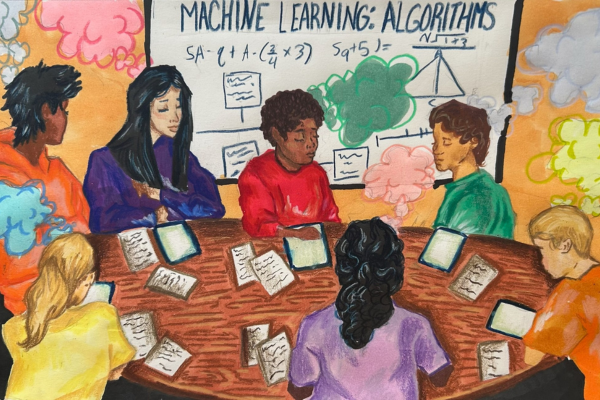
The emergence of Artificial Intelligence represents one of the most significant shifts in the schooling experience, a defining moment that will shape minds, communities, and possibilities for generations. Yet its impact will not be determined by the technology itself, but by the clarity and purpose with which system leaders choose to employ it. For districts like ours, where coherence is still developing and longstanding challenges persist, AI confronts us with a critical question: What problems of practice are we actually trying to solve as we remake learning?
Core Problems of Practice in U.S. K–12 Education
Problems of practice include excessive teacher workload, limited personalization for diverse learners, delayed assessment feedback, inequitable access to advanced tools, and insufficient professional capacity to integrate technology effectively (RAND Corporation, 2025; UNESCO, 2023).
For districts like ours, where coherence is still developing and longstanding challenges persist, AI confronts us with a critical question: What problems of practice are we actually trying to solve as we remake learning?
Leadership is an essential driver in AI use. In systems without full alignment, AI raises essential questions about instructional models, professional capacity, and the direction of learning. Across my leadership journey, I have seen how systems evolve and where they fall short. Through my recent ASU+GSV Fellowship, the gap between current practice and workforce demands came into focus (ASU+GSV, 2025).
Community reactions to AI included some skepticism, another initiative with heavy effort and limited return. The concern is real: teachers face unsustainable workloads, and administration pulls time from instruction (RAND Corporation, 2025). Yet the pace of AI requires engagement from district leaders. In my District, that urgency shaped our AI Summer Institute and new high school concept focused on AI, Health, Technology, Innovation, a Dual Language STEM Academy, and a STREAM Academy. The need to develop strategic solutions around these advancements led me to deeper global study.
Beyond Hype: A Clear Theory of Change
Through the Global Cities Education Network (GCEN), international educational leaders from around the world come together to rethink strategies and systems for children to achieve worldwide. In this network, participating schools, including those in Shanghai, have woven AI into priorities that connect economic development, learning and teaching. There is a discernible through line from policy to classroom.
Purpose-driven leadership demands a Theory of Change. Leaders need to articulate how a chosen AI tool is expected to change adult practice and student experience, along with what learning, support, and safeguards will guide implementation. Without this grounding, AI becomes a shiny layer on top of unchanged practice, which can deepen inequities or overload educators instead of improving learning and teaching.
The Master Teacher and the Machine
Shanghai’s progress draws on a Master Teacher model, district supervisors who serve as pedagogical coaches and research-focused teacher mentors, connecting policy to classrooms (Zhang, 2023; UNESCO, 2023). Evidence supports the approach: AI should amplify teachers’ strongest practices and augment, not replace, human judgment (Dede, 2024). Master Teachers curate learning, ensure ethical practice, and orchestrate personalization and assessment.
As generative AI advances, education will have to move beyond routine skill mastery toward higher order thinking, including analysis, creative synthesis, and ethical judgment, so our students become knowledge curators and designers.
This broader vision frames teaching as continuous learning, shared responsibility, and collective accountability (Zhang, 2023). United States administrators should craft theories of action informed by global evidence, aligned to the pedagogical shifts AI demands.
AI’s central purpose in school systems is to empower educators and enable personalization, not to replace the complex cognitive and relational work only teachers provide (Zenge, 2025). As generative AI advances, education will have to move beyond routine skill mastery toward higher order thinking, including analysis, creative synthesis, and ethical judgment, so our students become knowledge curators and designers.
A Framework for Success and Sustainability
To avoid fragmented piloting, districts need approaches that align policy and classroom practice. Globally, systems that make progress anchor innovation in coherent structures and human capacity. Shanghai shows policy, professional learning, and instruction operating as a unified ecosystem (UNESCO, 2023).
In Uruguay, the national Ceibal initiative centralizes access, integrated AI for personalized learning and teacher support ensuring digital and AI enabled learning benefits all students, not only the well resourced (UNESCO, 2023). In India, AI phone-based reading tools help teachers detect errors, personalize instruction, work offline, and scale millions of assessments, demonstrating successful technology-enabled pedagogy that strengthens learning while preserving teacher judgment.
In our District, we are incorporating the Digital Promise AI Literacy Framework (Lee et al., 2024) to build safe, ethical, effective use of AI. For teachers, AI literacy means understanding AI basics, applying tools responsibly, integrating them thoughtfully into instruction, and guiding students to use AI for creativity and problem solving. To scale and sustain, administrators need to ensure that every adult and student use evidence based practices within a shared understanding for responsible, consistent, accessible implementation.
As part of this work, we are piloting CourseMojo, an AI powered platform for personalized learning and multilingual instruction, and we have been awarded a grant to incorporate Your Way Learning, a model that leverages AI for differentiated instruction and student engagement. We have embraced Gemini across instructional and operational tools and invested in Google Champions, Google Coaches and Ambassadors to build internal expertise and foster a culture of innovation, so adoption translates into measurable gains in learning, teaching and access.
A Call to Action
The age of AI demands administrators who design human centered systems that secure student success and organizational stability. Our responsibility is to ensure AI serves human development and not the other way around. Remain anchored in the question: What problems of practice are we solving? Districts should define measurable outcomes, including reduced teacher workload, improved student engagement, and access to personalized learning so progress is tangible and sustainable. Our charge is to lead with clarity and purpose, moving AI from hype to humanity, and ensuring every student benefits from the future we are collectively shaping.
Our charge is to lead with clarity and purpose, moving AI from hype to humanity, and ensuring every student benefits from the future we are collectively shaping.
References
- ASU+GSV. (2025). Google GSV Education Innovation Fellowship.
- Dede, C. (2024). If AI is the answer, what is the question?
- Lee, K., Mills, K., Ruiz, P., et al. (2024). Digital Promise AI Literacy Framework.
- RAND Corporation. (2025). State of the American Teacher Survey.
- UNESCO. (2023). Education in the age of artificial intelligence.
- World Education Blog. (2025). AI in education: India’s experience with oral reading checks. UNESCO. Retrieved from https://unesdoc.unesco.org/ark:/48223/pf0000382661
- Zenge, A. (2025). The future of AI in education.
- Zhang, W. (2023). Master teacher model and AI integration in Shanghai
Subscribe to AASA's Blogs
Subscribe via RSS feed below. Learn more about RSS feeds here.