
Principle 2: The New Basics: Real Skills for Real Life
March 01, 2026
With its Public Education Promise framework, AASA hopes to overhaul the workings of public school systems in the United States to better the outcomes of all students. The second of the initiative’s five principles focuses on ensuring students are prepared for real life after graduation by prioritizing skills such as empathy and teamwork as part of the core curriculum.
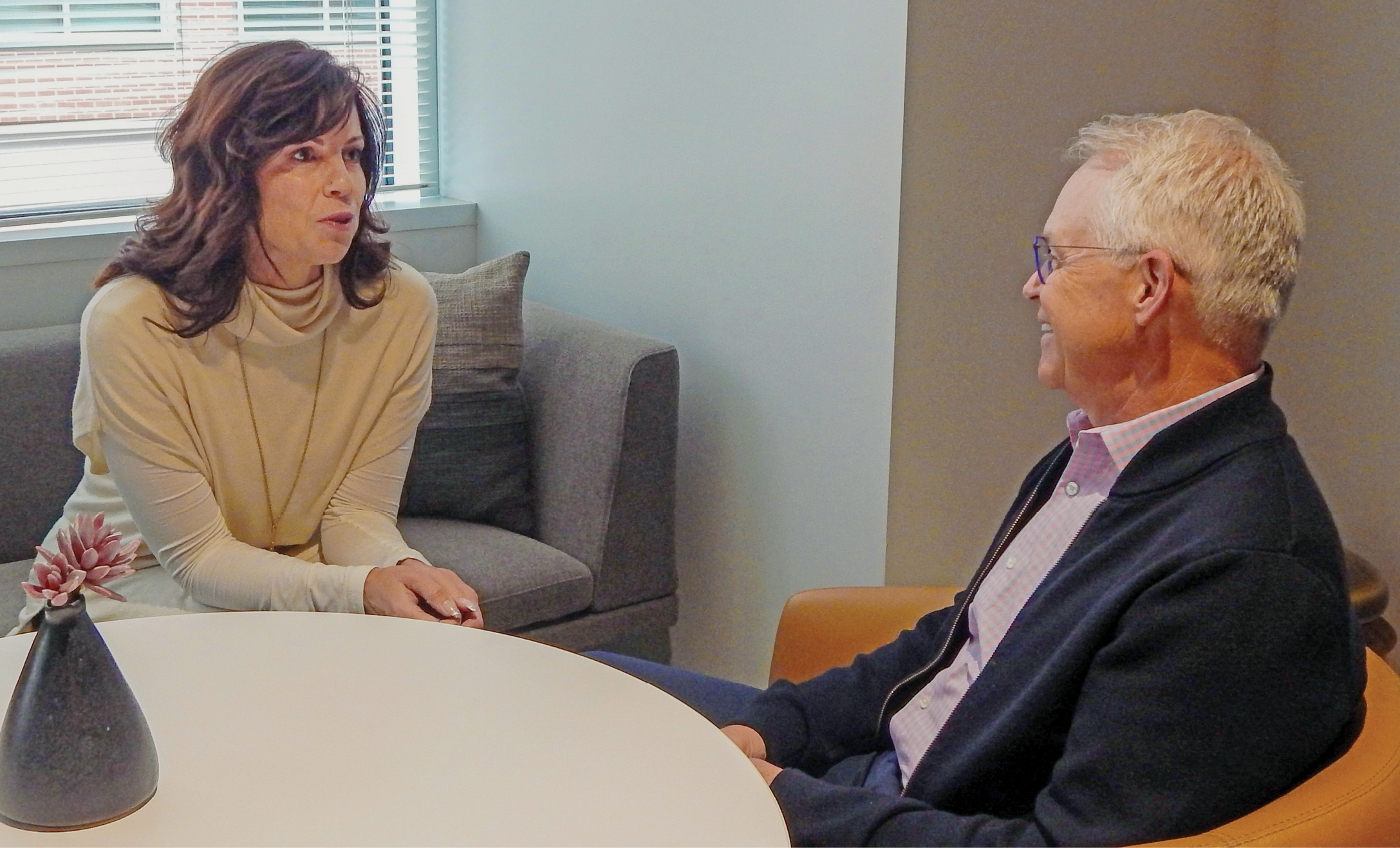
John Malloy, senior vice president of AASA’s Leadership Network, and Beth Silveira, senior director of the AASA Leadership Network, discuss what the New Basics means to AASA and its members in school system leadership and how the integration of these skills into teaching and learning will strengthen students in school and in life.
This conversation with School Administrator assistant editor Jacqueline Hyman has been edited for length and clarity.
Principle 2 of the Public Education Promise is the New Basics: Real Skills for Real Life. What are these new basics or skills that students will need to be ready for whatever they encounter in their futures?
John Malloy: The new basics is about helping kids be strong learners and wonderful human beings, both in school and beyond. It broadens the definition of success beyond academics to include collaboration, communication, creativity and problem solving so students can apply their learning in real-world situations.
These real skills also include focusing attention, minimizing distractions, prioritizing actions and following through on a plan, both individually and collectively.
When students build these habits, they gain confidence, motivation and a stronger sense of well-being as they see their work make a real difference.
Why is this an important principle for AASA to promote in the work of public schools? Why is this part of PEP?
Malloy: For decades, K–12 public education has focused mostly on knowledge and content. That has value, but testing a narrow band of content is becoming less aligned with the world our students are entering.
In this age of AI and constant social media, many students feel less connected, less confident and less able to find purpose. So this work is not only about broadening success. It is also about ensuring students are healthy and well in the world they’re entering.
Beth Silveira: We have incredible people who’ve been doing this work for years. The opportunity now is to take what’s already strong and make it accessible and consistent so that more educators feel confident stepping into it. This isn’t about diluting the work. It’s about elevating it. Our colleagues have proven its value through their practice. Now we make sure the whole system benefits.
Are there any skills students themselves find pressing?
Silveira: In my previous work with Battelle for Kids, I spent a lot of time with students in school districts across the country. They’ll tell you outright: They do better when the phones are away. They know they don’t need a device for everything. They’re overwhelmed by constant distraction, and they’re asking us to help them relearn how to focus and truly engage.
And when schools set clear boundaries — phones in a pouch or kept in the backpack — students are relieved. They want the break. They understand exactly what those devices are doing to them.
How does emphasizing these skills coexist with continuing to help students excel in academics?
Silveira: We’re asking educators to stretch into new territory while working in a system that still signals “Academics Only.” The real challenge is helping our communities see this isn’t an either/or. When students learn through real experiences that build the skills we know matter, their academic performance strengthens too. Our job is to reinforce that confidence, showing that a richer approach to learning prepares students better, not worse.
Malloy: I hear that concern often, that focusing on these skills means losing focus on reading, writing and math. That’s not true. We’re asking educators to design learning that goes beyond listening, note-taking and testing.
That more traditional model works for some of us. Many teachers, including me, learned that way and were rewarded for it — and so we understandably continue to perpetuate it.
So as not to overwhelm teachers and leaders, they can start with an existing lesson and ask a few key questions: Are students thinking deeply? Truly engaged? Owning the work? Communicating their learning? Reflecting on insights? And can they apply what they’ve learned to new situations?
What are some ways superintendents can start implementing the New Basics in their districts?
Malloy: I think it’s important to emphasize that leaders create the conditions, align resources and provide the capacity-building needed for any practice they want to see in classrooms and schools.
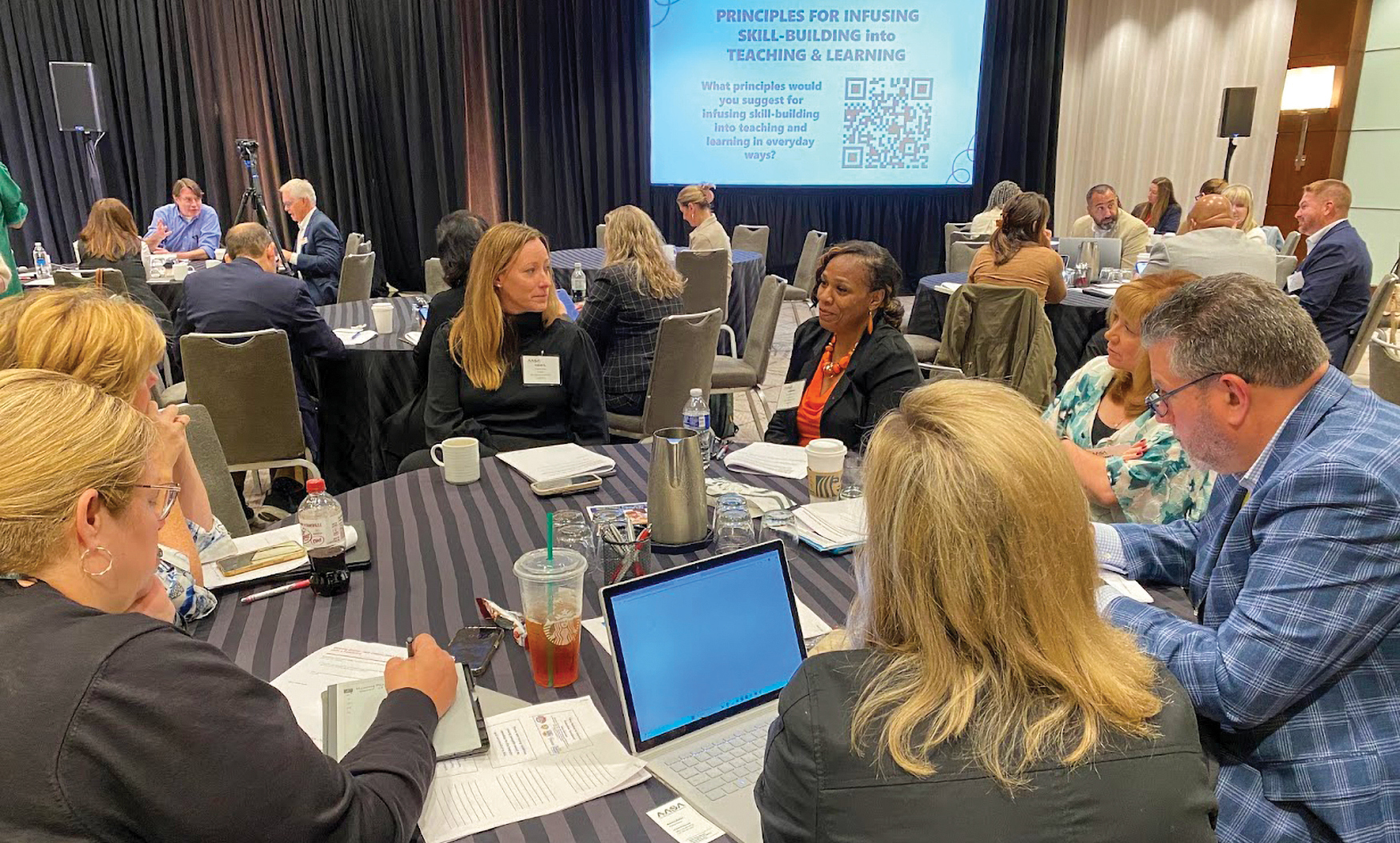
Silveira: A strong first step is for superintendents and their teams to name their theory of action: What do we believe will actually lead to these outcomes?
If we want students to think critically and engage in rich learning experiences, we need the same expectations for the adults. Are educators given the space, support and professional communities to model that kind of thinking themselves? When the system reinforces the practices we want students to develop, the New Basics: Real Skills for Real Life can take hold.
Without going too deep into Principle 5, Measure What Matters, how can we measure the successful implementation of the New Basics?
Malloy: Whenever we want to help students learn a new skill, we need a clear, shared understanding of what competence looks like.
Silveira: First, we need shared language and clear expectations. What does communication or problem solving look like in kindergarten versus 12th grade? When we define that simply and concretely, we can actually see progress.
Second, we should treat assessment as part of the learning, not a separate event. When students demonstrate these skills through real work and reflection, we’re measuring growth and strengthen it at the same time. That’s how we know the Real Skills are taking hold.
AASA hosted the Real Skills for Real Life conference last October. What was your most significant takeaway from the summit?
Malloy: My No. 1 takeaway is that the purpose of public education is to help students develop as healthy, contributing human beings. We cannot fulfill that commitment unless we intentionally model, teach and assess these skills.
This work must be as concrete as how we teach reading. Yet too often it’s seen as soft or extra instead of integral.
The last piece I took away is that adults need to reflect on their own executive-functioning skills because kids are watching.
Are there any other ways you feel your mind has changed since AASA first started to develop the Public Education Promise framework?
Malloy: I’ve always believed real skills are essential. What has shifted for me is recognizing the level of intentionality schools need to bring to supporting educators and engaging students.
My exposure to this work confirms this isn’t opinion. Brain research tells us we should be doing this.
Author
An Action Framework for Public Education
AASA’s Public Education Promise for ensuring every child receives a future-ready education consists of five guiding principles. School Administrator magazine will feature each one during 2026. This is our second article in the series. For additional insight, listen to the AASA Radio podcast on PEP’s second principle.
Principle 1: Prioritize Student-Centered Learning
Principle 2: The New Basics: Real Skills for Real Life
Principle 3: Attract, Hire, Retain and Reward the Best People
Principle 4: Build Highly Engaged Family, Community and Business Partnerships
Principle 5: Measure What Matters
Promoting Positive Risks in Rural Schools
By Christopher R. Nesmith
In Elma, Wash., a rural school district tucked between the Pacific Coast and the Cascades, we have learned that preparing students for the future means teaching them to take “positive risks.”
We define positive risk as the courage to step into the unfamiliar: to join a new club, speak up in class or design a solution that didn’t exist before. For me, this isn’t just educational theory. It is personal.
When I arrived in Elma as the new superintendent in 2021, I saw the challenge of belonging through the eyes of my own daughter, who was 13 at the time.
As a new student, the hallways can feel vast and isolating. She found her connection not just in a classroom, but by taking a risk to join the wrestling team and our Skills USA chapter. Today, her education is defined as much by her time on the mat and her preparation for public speaking competitions as it is by her course work. She didn’t just find a hobby. She found a team and a voice.
Belonging with Data
My daughter’s experience illustrates our districtwide goal. We strive for every student to be actively engaged in at least two co-curricular activities. To make this a reality, we adopted the AASA Redefining Ready! Dashboards.
Our work began with a simple question: How do we know every student has a place to belong?
We developed what we call our Redefining Ready Dashboard to track students involved in co-curricular and extracurricular activities. We monitor participation in Future Farmers of America, Skills USA, youth apprenticeships, performing arts and athletics, alongside grades and attendance.
When our activity engagement data show a student is disengaged, it triggers an intervention by a staff member to connect the student with a program that sparks his or her interest. Every student is represented in the dashboard, and our data tell us whether they’ve found connection and purpose beyond the classroom.
Not Just “Extras”
We have stopped viewing these activities as extracurricular. They are co-curricular, essential vehicles for meaningful growth.
In youth apprenticeships, students are not just observing. They are on job sites gaining industry certifications and work-based learning experience. In FFA and Skills USA, students are strengthening self-regulation and leadership by managing projects and competing at state levels. In performing arts and athletics, students learn that mistakes are not failures but part of the process of improvement.
These moments of risk taking are where self-regulation, collaboration and adaptability are formed. In this model, risk taking is not punished. It’s expected. Students learn to plan, pivot and persevere through feedback.
We’ve replaced the question “Did they learn it?” with “Can they show it?”
Project-based learning experiences have ranged from building community gardens to designing digital portfolios, from welding industry-level equipment to organizing peer mental health campaigns. Each one reinforces the habits of self-direction, teamwork and problem solving that define the new basics of public education.
The Outcomes
The impact of this mindset is measurable. Since implementing the Redefining Ready! Dashboard four years ago, engagement rates in co-curricular activities have doubled. Graduation and postsecondary readiness metrics are improving, but more importantly, students are describing school as a place that feels like theirs.
We have learned that when students see learning as something they can shape, they don’t just prepare for the future, they begin building it. It turns out that the best way to prepare students for the world is by empowering them to build real skills for real life by taking positive risks.
Christopher Nesmith is superintendent of Elma School District in Elma, Wash., and co-leads AASA’s Redefining Ready! Cohort.
Advertisement
Advertisement


.png?sfvrsn=3d584f2d_3)
Advertisement
Advertisement