
Measuring What Really Matters
October 01, 2026
President's Corner
If you’re anything like me, your inbox is a daily parade of spreadsheets, state report cards and color-coded dashboards. As superintendents, we live in a world overflowing with metrics. We talk about proficiency rates at cabinet meetings, present disaggregated data to our school boards and track performance trends until the numbers start blurring together.
It’s easy to get lost in the data. It’s easy to let the software turn our work into an exercise in compliance. But amid the mountain of mathematical equations, we need to pause and ask ourselves a fundamentally human question: Are we actually measuring what matters?
I think back to a realization I had early in my leadership journey: An assessment measures a moment, not a child’s potential. Standardized tests capture how a student performed on a given Tuesday morning. In a district that is 100 percent school-dependent, our students come to school tired, stressed and/or hungry. That test score is a snapshot. It is not a destiny. Yet if we aren’t careful, we allow numbers to become labels and stigmas. We let data define a student’s identity instead of using it to illuminate their path.
Data was never meant to be a sorting mechanism. Data is a story, and it’s a story that demands to be read with deep care and acted upon with fierce urgency.
Behind every single data point is a child with a name, a family, a set of dreams and a unique set of hurdles. When a metric drops, it shouldn’t spark panic or finger-pointing. It should convict us to take action. It should bug us. It should drive us straight into the hallway to ask, “What do our teachers need right now to reach (insert child’s name)?”
At every opening convocation in my school district, I stand in front of our staff and share a promise that serves as our north star: We are not responsible for how students come to us, but we are responsible for how they leave us.
Think about that for a second. Our kids walk through our doors carrying the full weight of the world. They come from different backgrounds, experiences and advantages. We cannot control the circumstances of their lives before they cross our thresholds. We can’t rewrite their pasts or change their home lives. But from the moment they step into our schools, their future becomes our charge.
Data should be the tool that helps us keep that promise. It should guide our decisions, sharpen our instruction and help us direct resources where they are needed most. But most importantly, we must remember this: All data must be humanized.
As you navigate through this school year, I challenge you to look at your district’s numbers a little differently. Push past the spreadsheets. Look for the stories, the faces and the potential waiting to be unlocked. Let the numbers convict you, let them move you, and let them drive the passionate, caring work that brought every single one of us into this profession in the first place.
Because in the end, when our students cross the graduation stage, and we shake their hands as we give them their diplomas, they won’t remember the spreadsheets we completed or the reports we filed. They will remember the people who believed in them, encouraged them and gave them hope. That’s the measure that ultimately matters.
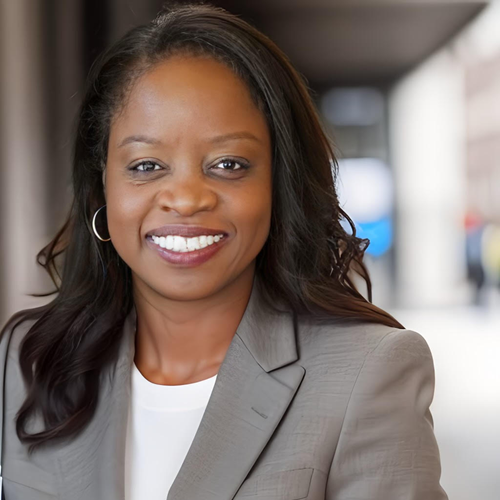
LaTonya Goffney is AASA president for 2026-27.
Author
Advertisement
Advertisement



Advertisement
Advertisement