
When Black Women Lead Through Uncertainty, We Do Not Disappear. We Rebuild.
February 03, 2026
Author
A New York Times article titled, “Black Women Turn to One Another as Their Career Paths Suddenly Recede,” was recently shared within professional circles of superintendents that I belong to, including a New York State group of women superintendents of color WhatsApp Group. What began as a shared article quickly became a meaningful conversation about leadership, opportunity, and the realities many Black women are navigating in today’s labor market.
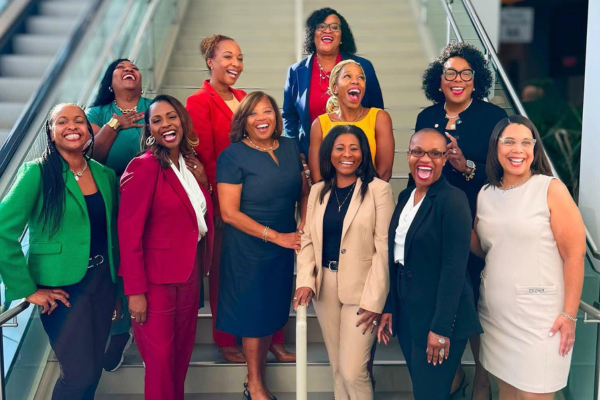
The article highlights that Black women, including those who are highly educated and experienced, are facing stalled careers, layoffs, and fewer leadership opportunities. What stood out most to me was not only the data, but the response. Black women are turning toward one another, sharing job leads, offering guidance, and building networks of mutual support.
This is leadership in action. It may not come with formal authority, but it reflects the very skills we value in district leadership: collaboration, problem solving, emotional intelligence, and collective responsibility.
When I was selected for my current role, my board president shared with me that she had been approached by someone who asked whether she was concerned about hiring a Black superintendent. Her response was simple. She said, “What do you mean?”
Black women are turning toward one another, sharing job leads, offering guidance, and building networks of mutual support. This is leadership in action.
She explained to me that neither she nor the board had considered my race or gender as a risk factor. They hired me because my experience, leadership approach, and vision aligned with the needs of the district. I was the right fit for the work and for the team.
That experience reinforced something I believe strongly. The most important factor in selecting any leader is alignment with the mission, the culture, and the goals of the organization. Fit matters. Trust matters. Shared values matter.
At the same time, we must acknowledge that too many highly qualified Black women never get the opportunity to be fully seen as a potential fit. Bias does not always appear as overt exclusion. Often it shows up quietly in who is encouraged to apply, who is sponsored for advancement, and who is given room to lead without excessive scrutiny.
For superintendents and school boards, this moment invites reflection and action. It asks us to examine not only our hiring practices, but also our pipelines, mentoring structures, and retention efforts. Equity is not achieved solely by diversifying applicant pools. It is sustained by creating leadership environments where talented individuals are supported, trusted, and allowed to grow.
For superintendents and school boards, this moment invites reflection and action. It asks us to examine not only our hiring practices, but also our pipelines, mentoring structures, and retention efforts.
What gives me hope is what I see within my own professional communities. Black women superintendents are not waiting for institutions to fix everything. We are supporting one another, sharing strategies, and creating networks that strengthen both our leadership and the systems we serve.
That does not replace the need for systemic change, but it does demonstrate the strength of leadership rooted in collaboration and community.
My hope is that districts, boards, and professional organizations continue to move beyond symbolic commitments and toward structures that truly expand opportunity. When Black women thrive in leadership, schools benefit from stronger decision making, broader perspectives, and cultures that reflect the communities they serve.
This is not simply a matter of representation. It is a matter of leadership capacity and organizational health.
When Black women lead through uncertainty, we do not disappear. We rebuild. And in doing so, we strengthen the institutions we are entrusted to lead.


