Know It, Own It, Leverage It: How One District Makes Its Portrait of a Graduate Real
October 22, 2026
When Autumn crossed the graduation stage, she already had a job. Her senior capstone, a youth apprenticeship with a local fire department, turned into a full-time firefighter position by the time she finished high school.
Autumn's path is what the Howard-Suamico School District in Wisconsin hopes for every learner. At a session during AASA's 2026 EdLeader Promise Innovation Conference (EPIC), district and school leaders shared how their Graduate Profile shapes learning from kindergarten through 12th grade. Their work brings two principles of AASA's Public Education Promise to life: prioritizing student-centered learning that builds on each student's needs and strengths, and teaching the new basics — real skills for real life — alongside academics.

The team's shorthand for it is simple: Know yourself, own it and leverage it. The goal is for students to bring all of those skills together to navigate their world with hope, confidence, purpose and agency.
It all begins with ownership, and in HSSD, that starts long before high school.
Agency starts in kindergarten
HSSD breaks its Graduate Profile into grade bands with "I can" statements, so students at every age know what they're working toward. Agency isn't taught as a separate lesson; it's built into every skill.
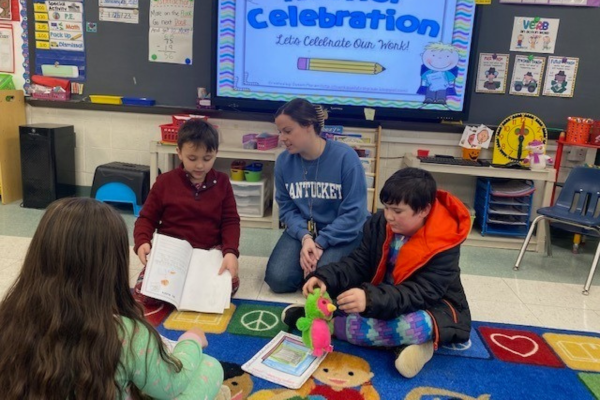
The common language starts early. Kindergartners talk about glows and grows and set WIGs — wildly important goals. In a video from his kindergarten year shown to EPIC attendees, Harvey walked through his portfolio. He called himself a critical thinker because he asks questions (his question that year: Why do we have seasons?) and listed the classroom leadership jobs he had held. Now a third grader, Harvey charts his own progress toward his goals.
Coherence by design
So how do five elementary schools end up doing this work the same way? By design, the presenters said. Coherence doesn't happen by chance.
The district's strategic framework, A Framework for Our Future, names four priority areas: educational excellence, staff experience, student engagement, and operational excellence and fiscal responsibility. Every school sets goals in each area and tracks them on its scorecard.
The Profile is the framework's north star, a unifying vision of what every student should know and be able to do by graduation. In addition to academic knowledge, it focuses on seven key skills:
- Self Starter
- Critical Thinker
- Collaborator
- Communicator
- Adaptable
- Responsible
- Solutionist
At Bay Harbor Elementary, teachers join action teams instead of receiving initiatives from the top down. Former technology integration specialists are now instructional innovation coaches, who meet monthly with every grade-level team to plan learning experiences that build Graduate Profile skills into content teachers already cover.
Goals connect all the way from the school to each student. The school sets a goal, each class sets a lead measure that supports it and each student sets a personal goal. Fourth graders collect classroom data weekly and post it for the whole school.
Students curate portfolios of their best work and reflections, then lead their own conferences from kindergarten through fourth grade. Once a month, each teacher meets with a small group of about 10 students to practice specific skills.
Learning with an audience
Each grade level has a signature project that ends with an authentic audience. For example, in third grade, students design and build an arcade for the school community.

The project kicks off with a visit to Bay Tek Entertainment, a local arcade game company, where students see how games are designed and built. Back at school, they bring together reading, math and writing to create their own games and consoles, then open the arcade to families, community members and the rest of the school.
The work still ahead
The presenters were candid that they're still in the middle of the journey. Each year, HSSD measures Graduate Profile implementation in all eight schools using staff perception surveys, walkthrough data, student focus groups and portfolio artifacts. The elementary schools are showing strong results; the high school is the outlier.
The district traces the gap to structure. With 45-minute periods, some teachers see as many as 250 students a day, and ninth graders who are used to collaborative, inquiry-based work often find themselves sitting in rows. The district is currently listening to teacher leaders and student focus groups to learn together what needs to change.
For leaders starting or refining this work, the team recommended AASA's Public Education Promise self-assessment for Principle 1: Prioritize Student-Centered Learning. They suggested beginning with its vision and strategy domain and using its reflection questions with leadership teams to keep the work centered on students.
Bring your Portrait to life.
Many districts have a Portrait of a Graduate. The harder part is making it show up in every classroom. Read more about how Howard-Suamico did it through AASA's Portrait to Practice® Frameworks for Learning, and explore how District Services can support your district at aasa.org/services.
Subscribe to AASA's Blogs
Subscribe via RSS feed below. Learn more about RSS feeds here.