Raising Thinkers in a World of Algorithms: AI Education with a Human Touch
February 10, 2026
Author

Navigating a Polarized Conversation
Public schools once again find themselves at the center of a deeply polarized conversation. At the very moment when artificial intelligence and digital tools are rapidly reshaping the workforce and higher education, schools are being asked to both accelerate instruction in these areas and, paradoxically, to significantly restrict or even eliminate student access to the very tools required to do so. Debates around 1:1 devices, screen time, and AI are often framed as all-or-nothing propositions.
How should schools respond to these seemingly opposite demands? As we always have: by doing what is in the best interest of students. When issues become politicized, solutions drift toward extremes. One side calls for removing laptops from classrooms; another calls for mandating AI instruction at every grade level. Educators know that best practices lie in a more thoughtful, balanced approach — one that clearly distinguishes between technology used without purpose and technology used intentionally to deepen learning.
In today’s world, denying students access to devices is the modern equivalent of denying them access to textbooks a generation ago.
Digital Access as an Equity Imperative
Access to digital tools is, at its core, an equity issue. In today’s world, denying students access to devices is the modern equivalent of denying them access to textbooks a generation ago. Laptops, software, and connectivity are no longer optional; they are foundational learning tools and gateways to opportunity. Students who lack access are immediately placed at a disadvantage — not only academically, but in their preparation for college, careers, and life. Ensuring equitable access is not about convenience; it is about fairness and about fulfilling our responsibility to prepare every learner for their future success.
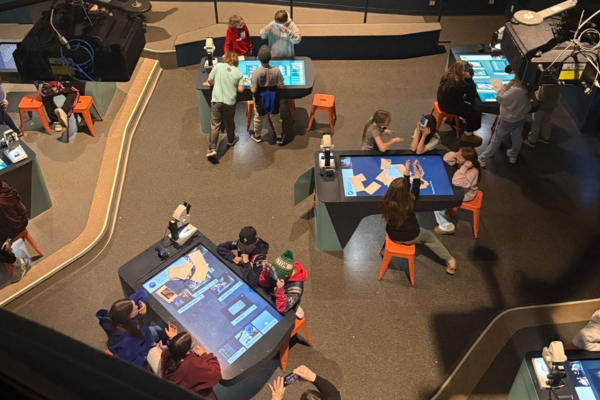
At the same time, access alone is not the goal. Just as a textbook has little value if it is never meaningfully used, devices must serve a clear instructional purpose. Technology should never be a digital babysitter or a distraction, but a powerful tool for creation, collaboration, problem-solving, and personalization. When used well, digital tools expand what is possible in the classroom — allowing students to explore complex ideas, receive timely feedback, engage in authentic research, and demonstrate learning in ways that honor their individual strengths.
Keeping Humanity at the Center
In an increasingly algorithm-driven world, our greatest task is not to compete with machines, but to cultivate what machines can never replace: human thinking, empathy, creativity, and judgment. This means explicitly teaching digital literacy — how to ask good questions, recognize bias, evaluate sources, understand the limitations of AI, and most importantly, discern truth from misinformation. It means guiding students to become ethical, responsible, and kind digital citizens who use technology in ways that reflect our shared values. We don’t give up our values in a digital world; they become even more important to teach and use.
 A student who has participated in an ice fishing field experience and they are now learning how to measure, and fillet a fish to prepare for eating.
What This Looks Like in Practice
When you walk into a classroom, technology should not look like students passively scrolling or simply watching videos in silence. Instead, you should see students actively using digital tools to design, write, model, collaborate, code, analyze, and connect their learning to the real world. Purposeful technology use supports differentiation, provides timely and targeted interventions, and frees teachers to spend more time building relationships and strengthening classroom community. At its best, technology amplifies great teaching — it never replaces it.
A Message to Educators
And to the public educators doing this work every day: the future is bright because of you. You are the bridge between innovation and humanity, between emerging tools and enduring values. Your thoughtful integration of technology—grounded in purpose, equity, and care — ensures that our students will not simply be users of AI, but critical thinkers, ethical leaders, and compassionate problem solvers — exactly the skills our world needs now more than ever.