Learning Is Not Optional: Reimagining Advisory Periods
July 24, 2026
Author

Building Purpose Into Advisory
It’s easy for advisory periods that are built into a school schedule to become disconnected from the core work of teaching and learning. The time is allocated, but the impact is unclear or unmeasurable. School districts are constantly being asked to do more with less; therefore, leaders must be intentional about making sure scheduled time is used for its intended purpose, which is to improve learning for all students. But what if there were a way to use it to strengthen teacher collaboration as well?
The transition to high school is a critical point in a student’s educational journey. A key part of the freshman experience is moving students from dependency to owning their own learning.
The transition to high school is a critical point in a student’s educational journey. A key part of the freshman experience is moving students from dependency to owning their own learning. For freshmen, it is especially important to maximize each period of the schedule as students adjust to new systems, increased rigor, and the pressure of knowing their grade point average may determine future opportunities. At the Vestavia Hills High School Freshman Campus, we approach advisory as an opportunity to build a system that strengthens student learning and improves teacher collaboration. The best systems support students and teachers because school cultures should be ones where learning is not optional for both.
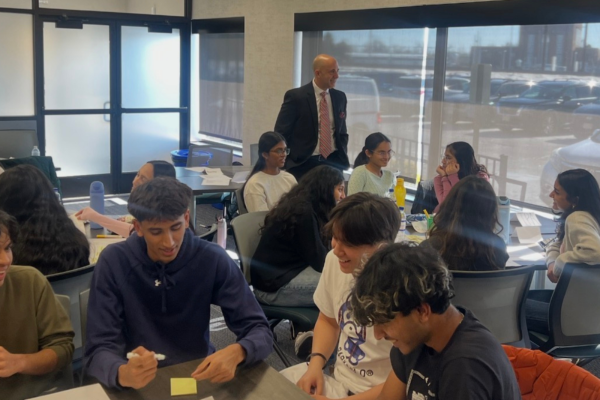
Once each week, we use our daily advisory period as an engagement period, a structured time that allows students to choose needed remediation or desired enrichment while connecting teacher collaboration directly to student learning. Our engagement period provides a consistent, embedded opportunity for intervention and enrichment, ensuring that all students have equitable access to the support they need during the school day. It is a system that has become the cornerstone of our school culture and serves as an opportunity to build student agency and breathe life into our professional learning communities.
Strengthening Teacher Collaboration
The engagement period gives teachers purpose in their collaboration. Without direction, professional learning team meetings can lose focus and fail to lead to improved student outcomes. Teachers use their collaborative time to engage in student-centered discussions focused on data, assessments, and instructional strategies because the engagement period gives that work immediate purpose. This information is then used to design sessions that will be offered to students for the following week’s engagement period. Each teacher offers a session tailored to provide either academic support or enrichment opportunities. Session offerings change weekly, as they are driven by current student needs.
Building Student Ownership
For students, this structure provides a voice in their learning and the opportunity to develop agency and become more independent. Their learning becomes personalized and responsive because a student who needs additional support in a specific skill can access it within the school day, while another student can pursue enrichment in an area of strength. Students are given the opportunity to view the available sessions, reflect on their current academic situation, identify opportunities for growth, and select the one that best meets their academic needs. If they are performing well in all classes, they can pursue an enrichment activity that allows them to learn more about a topic of interest that will not be taught in class. For example, an enrichment session has focused on the weapons of World War II. This was a topic of student interest that was not directly related to a standard, so it would not be taught in depth in the regular classroom. This engagement period teaches students how to seek help, how to use their time, and how to take responsibility for their progress, which are skills that extend far beyond ninth grade.
When students feel safe, respected, known, and supported by all teachers, they are more likely to engage in the work of learning.
Creating a Culture of “Our Students”
Finally, excellence happens together, and this purposeful system improves school culture by shifting teachers’ mindsets from “my students” or “your students” to “our students,” as students are encouraged to select teachers they do not have in class daily for their engagement period session. Teachers leverage their collective strengths so that all students benefit from the most effective instruction available. This shared responsibility gives rise to collective efficacy throughout the building. When students feel safe, respected, known, and supported by all teachers, they are more likely to engage in the work of learning.
Advisory does not have to be a disconnected part of the schedule or just a quiet study time in a high school setting. By establishing a shared belief that learning is not optional, the advisory period becomes a system that allows students to take ownership of their learning, a skill that will serve them well beyond school, and provides purpose for meaningful professional collaboration among teachers. When students and teachers alike understand that learning is not optional, advisory becomes a meaningful part of the school culture rather than just another period in the day.