Building the Story Together: Good Governance Does Not Happen by Accident
September 08, 2026
Author
Imagine getting into a car with five people, and all five try to squeeze into the driver's seat with a hand on the steering wheel. Now imagine seven. Or nine. In some school divisions, 14.
Everyone in the car may want the same thing. They may care deeply about reaching the destination and may each see something important from where they are sitting. One person may notice a hazard ahead. Another may know something about the road being traveled. Someone else may hear from people along the way who believe we should take a different route. Every one of those perspectives can be valuable. But we still cannot have multiple people trying to steer the same vehicle.
I often use this analogy when I talk about the relationship between a school board and a superintendent because it captures one of the most important principles of good governance: we have different roles in reaching the same destination.

The board sets the destination. The superintendent drives.
The board collectively establishes priorities, defines the outcomes it expects for students, sets policy, approves resources, monitors progress, and holds the superintendent accountable for results. The superintendent's responsibility is to take that direction and lead the organization toward those outcomes.
Neither role works particularly well without the other. A driver without a clear destination can spend a great deal of time moving without making meaningful progress. Likewise, knowing exactly where you want to go does little good if no one has the authority to drive. The distinction sounds simple. In practice, it requires discipline, communication, and trust.
Throughout my career, I have learned that this kind of clarity does not simply arise from policy or handbooks. Roles must be intentionally established, regularly reinforced, and grounded in mutual respect. Because when the lines between governance and operations become blurred, even people with the very best intentions can find themselves stuck in "organizational traffic," where uncertainty, overlapping responsibilities, and competing priorities slow progress. And in public education, our students simply cannot afford for the adults responsible for their success to remain stuck in traffic.
Because when the lines between governance and operations become blurred, even people with the very best intentions can find themselves stuck in "organizational traffic," where uncertainty, overlapping responsibilities, and competing priorities slow progress.
Start With the Destination in Mind
For me, good governance begins with a shared understanding of the destination.
In public education, that destination should always bring us back to our students’ learning, well-being, sense of belonging, and academic achievement. Keeping that destination in mind also helps to clarify how the board responds when concerns arise along the way. Board members hear concerns about transportation, staffing, safety, facilities, programs, and countless other issues. Those conversations matter because they often reveal challenges that require attention. Listening to families, employees, students, and community members is an essential part of leadership.
The question is not whether concerns should be raised; they should. The important question is what happens next.
A board member asking, "What does our data tell us, and how are we addressing the results?" is exercising appropriate oversight.
A board member directing a department to make a specific operational change has moved from governance into management.
That is the difference between helping establish where we need to go and reaching over to grab the steering wheel.
We Cannot All Have Our Hands on the Steering Wheel
When several people try to drive the same car, more hands on the steering wheel do not make the vehicle safer. They make it harder to drive.
The same is true in a school division. The board governs collectively. The superintendent leads the organization and is accountable to the board for its performance. That distinction is about clarity and accountability rather than power and territory.
When authority is unclear, the confusion rarely stays at the top. Staff begin to wonder whose direction to follow, and leaders become hesitant to make decisions. Accountability becomes harder to establish because responsibility is spread among too many people.
If role confusion becomes a pattern, it may be time to repaint the lanes together to ensure the organization keeps moving forward.
Role clarity is not about ego or bureaucracy; rather, it is what allows a complex organization to function effectively.
Establish the Lanes Before You Need Them
Another lesson I have learned is not to wait for a problem to start talking about governance.
Early in the superintendent-board relationship, it is important to have candid conversations about how the board and superintendent will work together. How will concerns be raised? What information does the board need? When is direct communication with staff appropriate? How will requests be handled? What will happen when disagreements arise?
These conversations establish expectations, create predictability, and build trust. They are especially important when a school division faces controversy, public pressure, financial constraints, or unforeseen challenges.
These conversations cannot be one-time events. People change. Circumstances change. The pressures facing a school division change. In other words, road markings fade. When they do, we must repaint them.
Superintendents have an important responsibility as well: providing clear, useful information about student outcomes, organizational health, and progress toward established priorities. That allows board members to focus on governance questions without needing to manage day-to-day operations.
When a board member raises an operational concern, I have found it more productive to acknowledge it, discuss the desired outcome, explain how progress will be measured, and establish a timeline for reporting back. That keeps the board informed without inviting it to overhaul the engine.
When We Drift Out of Our Lanes
Even in healthy superintendent-board relationships, boundaries will blur from time to time. That is not necessarily a sign that the relationship is broken, but it does require attention.
When that happens, return to purpose rather than position and assume positive intent.
Ask a few simple questions:
- What are we trying to accomplish for students?
- Who has the authority to make this decision?
- Who is accountable for the outcome?
- Are we using the communication channels we agreed upon?
If role confusion becomes a pattern, it may be time to repaint the lanes together to ensure the organization keeps moving forward.
Trust Gives Us the Green Light
No governance handbook, protocol, or policy manual can replace trust.
Trust is built over time through transparency, communication, reliability, and mutual respect. It grows when board members know they will receive the information they need and when superintendents know they have the space and authority to lead.
That does not mean we will always agree. We will not. Agreement is not the standard for a healthy governance relationship. Trust, clarity, and shared purpose are.
The board sets the direction and guardrails. The superintendent leads the work, makes operational decisions, and is accountable for results. That clarity makes effective leadership possible.
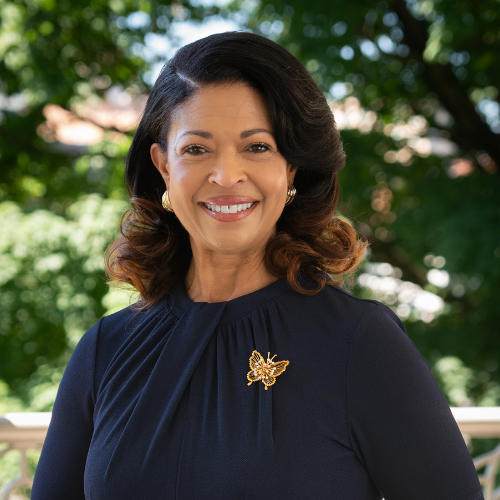
The road will bring challenges, but clear roles help us navigate them. For school board members: set the destination, establish the guardrails, monitor progress, and trust the superintendent to lead. For superintendents, move forward, stay focused, and work together with all stakeholders so that, collectively, we can all keep the focus where it belongs: on our students.In this "Building the Story Together" series, Dr. Verletta White explores how superintendents and school boards can build the trust and structures that keep public education's promise to students. Drawing from her experience in Roanoke City Public Schools (Va.), she covers everything from proactive communication to mutual accountability to advice for aspiring superintendents.