Belonging by Design: A Conversation with Max on the Promise of IDEA
December 12, 2025
Authors
This year marks the fiftieth anniversary of the Individuals with Disabilities Education Act (IDEA), a landmark commitment that ensures every student, regardless of ability, has the right to learn, participate, and belong in public education. At Margaretville Central School, IDEA is more than a law. It is a daily promise — a promise that students like Max are seen, valued, and supported as full members of our school community.
This anniversary invites us to reflect not only on how far we have come, but how we continue building a culture where inclusion is not a program or an initiative. It is the way we show up for one another, every single day.
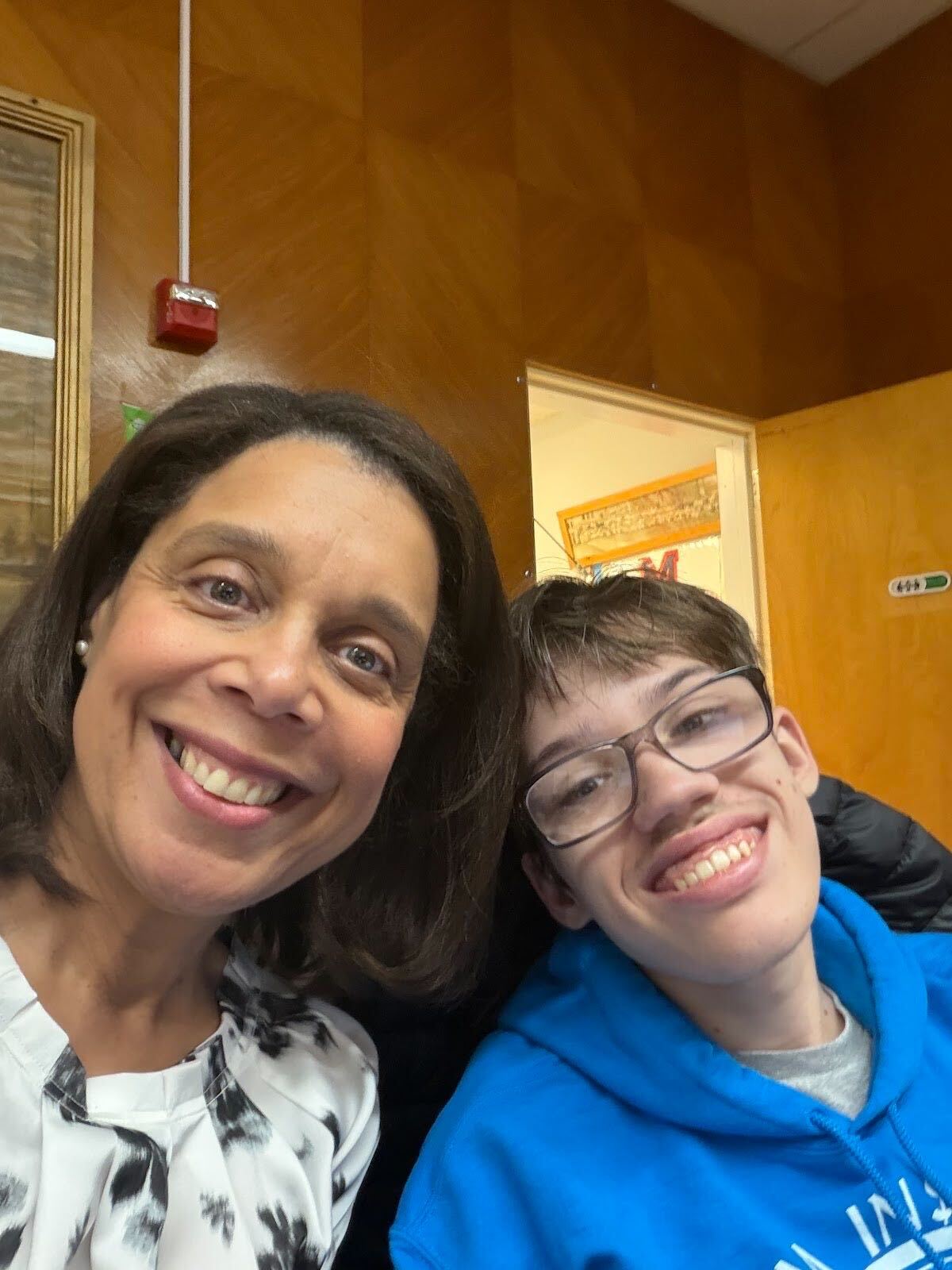
Recently, I sat down with one of our students, Max Pascarella, to talk about his experience, his hopes for the future, and the power of belonging. Max is a Boy Scout, an active community member, a baseball player, and someone who greets nearly everyone he meets with a smile and a fist bump. More importantly, he is a reminder of what can happen when a school community embraces students as they are.
What follows is our conversation, shared with his permission.
Q: How would you describe your experience at Margaretville so far?
Max:
"School at Margaretville has been so family-like. My classmates do not care if I have a disability. They just want to be my friends. And I love that."
He is right. Max is one of the most well known and well liked students in our building. His sense of humor, kindness, and natural leadership have made him a beloved part of our community.
Max is not just a student with a disability. He is a student who may do some things differently. We all have something that requires support, whether it is mobility, focus, or anxiety. Max’s presence reminds us of that common humanity.
Q: Can you share a moment when you truly felt seen and included?
Max:
"When we had a volleyball unit in gym, my classmates made sure to include me in every way they could. They made new ways to pass. They made sure I was part of every play."
"Even though I cannot run, I am a pretty good hitter."
Max uses a wheelchair, but he plays baseball, stays involved in activities, and fully participates in school life. That quiet confidence is part of who he is, and it is part of what inclusion makes possible.
Q: Can you describe a time when you advocated for something important to you?
Max: "We always wanted to do a concert on the stage. Up until three years ago there was no lift. I said, ‘This is not right. I need a way to get up there.’ And the next day they said, ‘We got you.’ Soon after, the lift was being worked on."
For years, our stage had no lift. Students who used wheelchairs needed to be physically carried up, which was not safe and certainly was not equitable. Max advocated for that to change, and it happened.
Max: "The lift is so slow that we should play some music, specifically the theme from Space Odyssey!"
Q: What supports help you learn best?
Max: "Extra time on assignments. Notes from class so I do not have to look at the board and copy at the same time."
You do not need a disability to know how hard that can be.
I shared with him that my own brain works differently. I am an ADHD learner. I listen and watch to understand information. Paying attention and taking notes at the same time can be difficult for me as well.
We all learn differently. The goal is making sure students get what they need in order to thrive.
Q: What do you wish all educators understood about students with disabilities?
Max: "Just because we are different does not mean we are less. It does not mean that something is wrong. We are just different. But we are all the same in a way."
His message is simple and profound. Students are students. They want to be included, supported, respected, and loved.
I told Max something I hope he remembers. When I first arrived at Margaretville, he was one of the first people who made me feel welcome. His kindness, his fist bumps, and his smile became a part of how I began to understand this place. In many ways, he teaches us what community looks like.
Q: What makes you feel most included?
That is the power of culture. In a small school like ours, every student has the chance to be involved in sports, clubs, theater, or activities. Students are not cut from teams or pushed out of opportunities. They get to try. They get to belong.
And Max feels that belonging deeply.
Q: Looking ahead, what do you hope for the next fifty years of IDEA?
His hope is simple. Every student, in every school, should experience what he has experienced. That is the future IDEA invites us to build.
Q: Is there a final message you want everyone to know?
Max: "It is never too late to have an impact on your community."
In Max’s words, every person has the power to make a difference, no matter when they begin. Inclusion is not something schools do to students. It is something students and adults build together.
Conclusion
IDEA has shaped fifty years of progress, but laws do not create belonging. People do. Conversations like this one with Max remind us that inclusion becomes real when communities commit to knowing one another, supporting one another, and believing in one another.
Max embodies what IDEA looks like in practice. And our charge is clear: to ensure every student feels seen and valued, and to keep building schools where belonging is not earned. It is expected.